Wednesday, October 10, 2007

Finished Objects

Right before we left for our week in Chicago (more details soon), I finished knitting the purple silk Swallowtail shawl. My first Swallowtail took forever and was absolutely cursed. Once it was actually finished, I could see that its very fine silk yarn made it stunningly gorgeous. This one, with slightly thicker yarn, flew off the needles within a week, without incident. While not as delicate, it is lovely as well. Fantastic pattern.

Here it is on display at Chicago's Millennium Park:


* * *

And I came home to an advanced copy of my book! While no needles were involved, it is quite a sense of accomplishment to have one's oldest WIP (Work In Progress, for you non-knitters) come into life.


Celebration all around!

Saturday, September 29, 2007

Off...

...to Chicago for a week. I'll check in if I can--but if not, see you when I get back!

Friday, September 28, 2007

Pottery and Beer Bread

While we were in North Carolina, I found a beautiful bread bowl at a local potter's studio.


BEER BREAD:

3 cups white whole wheat flour
2 TB baking powder
pinch of salt
3 TB sugar
1 bottle or can of beer

Mix together,
adding a little water if necessary to get it all mixed in.
Put in a greased bowl and
bake in a preheated 350 degree oven
for 50 minutes.


* * *

I loved the glazing on the pottery--and it looked astonishingly familiar. Surely it wasn't the same glaze combination I used for a set of small bowls made in a pottery class almost fifteen years ago.

I bought it and brought it home to compare:


WOW!

Thursday, September 27, 2007

Hemp Forests


I recently finished and blocked the lovely Forest Canopy Shawl designed by Susan from I'm Knitting As Fast As I Can. The pattern is fantastic for a first shawl, I suspect, because of the incredible regularity of the pattern and the fact that the directions are so abundantly clear and complete. For me, it was a great project to knit at my knitting group and at conferences.


My shawl is knit with hemp laceweight yarn bought from DZined at the Maryland Sheep and Wool Festival last spring. Although the inflexible yarn was hard on my hands while knitting and I therefore only knitted a few rows of this shawl at a time, I loved the crisp feel during the summer heat--and I now adore the drape--so different from silk, so different from wool.

Hemp has a reputation as a very, very hard-wearing fiber. (Hemp fibers can even be used to strengthen cement!) According to Wikipedia, a field of hemp grows very quickly and without much need of soil amendment. It produces 250% more fiber than cotton and 600% more fiber than flax when grown on the same land. The hemp plant produces everything from edible seeds to paper, from biodiesel to ethanol, from plastics to cosmetics. (And did I mention that it made a wonderful fiber?)


Son only agreed to model the shawl if I also showed the lovely dodecahedron he made with his Zome Tools (a construction toy made by these fine folks) in homeschool geometry this morning. He was inspired by the dynamite The Joy of Thinking DVD lectures produced by the The Teaching Company.

Wednesday, September 26, 2007

Celluloid Cuba

David and I recently watched the fantastic film The Motorcycle Diaries. The film chronicles Che Guevara traveling through South America where, upon seeing great poverty and illness as well as social and economic exploitation, he began to formulate his political theories and to advocate a unified Latin America. While some reviewers have pointed to the fact that Che Guevara was in fact a man who also supported vindictive violence, the film offers a beautiful image of thoughtful reflection as well as absolute commitment to justice and to peace.

Learning about Che (as seen in popular film but also alternate portrayals made by academics) led us to learn more about Cuba as well, given Che's leadership in the Cuban Revolution. We soon heard about a film made in 1964 but not released in the US until 1995: I Am Cuba. The film, made by Soviet and Cuban filmmakers working together,is often portrayed by Americans as pure propaganda, but in reality both Cuban authorities and Soviet authorities condemned the film as counterrevolutionary. No matter what your politics or your beliefs, the movie is visually one of the most stunning works I have ever seen--full of "visual pyrotechnics" as one reviewer says. The message of the destructive nature of social inequality is extremely powerful. But the ending--that the violent overthrow of the government is the happy answer--left me trembling.

A film about the current state of affairs in Cuba, The Power Of Community: How Cuba Survived Peak Oil, carries the revolutionary story forward. At the filmmakers summarize, "When the Soviet Union collapsed in 1990, Cuba's economy went into a tailspin. With imports of oil cut by more than half--and food by 80 percent--people were desperate." The filmmakers tell that in the film, "Cubans share how they transitioned from a highly mechanized, industrial agricultural system to one using organic methods of farming and local, urban gardens. [The movie] is an unusual look into the Cuban culture during this economic crisis, which they call 'The Special Period.' The film opens with a short history of Peak Oil, a term for the time in our history when world oil production will reach its all-time peak and begin to decline forever. Cuba, the only country that has faced [the full ramifications of oilfield decline] is an example of options and hope."

Can the rest of the world face the crisis of global Peak Oil with the same commitment to health care and education for all?

Tuesday, September 25, 2007

Believing that the Weird Guy is Go(o)d


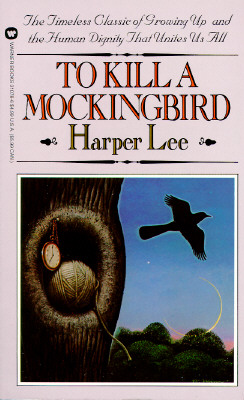
You're To Kill a Mockingbird!

by Harper Lee

Perceived as a revolutionary and groundbreaking person, you have
changed the minds of many people. While questioning the authority around you, you've
also taken a significant amount of flack. But you've had the admirable guts to
persevere. There's a weird guy in the neighborhood using dubious means to protect you,
but you're pretty sure it's worth it in the end. In the end, it remains unclear to you
whether finches and mockingbirds get along in real life.


* * *
But not only am I friends with the Weird Guy. He is my own reflection:


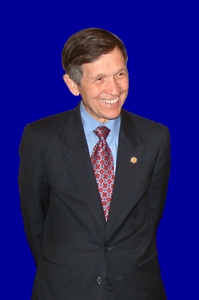
You're Kucinich!


As Dennis Kucinich, you are perceived as being just a bit outside. Despite not fitting in,
well, anywhere, you maintain a vocal presence and try not to let anyone get away with ignoring
you. This would make you the classically annoying kid on the fringe of a group if you weren't
proven right so darn often. Since you are, you end up being more like a really tactless prophet.


Take the 2008 Presidential Ticket Quiz
and the Book Quiz at the Blue Pyramid.


Thanks go to Knitting on the Left (Hand) for steering me to this quiz site!

Monday, September 24, 2007

Son's Self Portrait...

...with hot chocolate:

Sunday, September 23, 2007

Hanging Out with the Fish

Traditionally, Jews on Yom Kippur read the portion of the Bible about Jonah and the Whale, or rather (a better translation) Jonah and the Really Big Fish.

In this story, God commands Jonah to pass judgment against the people living in the capital of the Assyrian (ie, not Jewish) empire.

Jonah refuses, running off to sea to escape God.

The Bible that I picked up during services tells me that Jonah literally means dove, symbolizing his reluctance to put God's wrathful command to action.

When an enormous storm arises and will not abate, the crew throws Jonah overboard in an effort to appease God and make the winds die down. Once in the waters, a giant fish swallows Jonah whole. He stays in his belly for three days and three nights until Jonah repents to God.

* * *

Perhaps you guessed from my last post how frustrated I feel with Yom Kippur. So I did what Jonah did. I planned my escape.

So I packed my bag with my journal, an iPod with something specific in mind to listen to, a book, and other assorted entertainments.

After I left the synagogue, I walked to a local park to sit on a bench. But what I found there was not peace and quiet but a small peace rally. I held a banner which read "Peace is the way" and showed a dove with outstretched wings. I thought of Jonah, wondering if he could be here, too.

Then I sat on a bench, plugged in my earphone and turned on Julia Sweeney's Letting Go of God. She is terribly witty and amazingly wise--and, well, not exactly your standard Yom Kippur fare.

I've been an atheist all my life, but the role of organized religion has changed and re-changed over time. Right now I feel like I am hypocritical and lying, even making fun of true believers, if I engage in words and rituals that not only have no literal meaning to me but also challenge my metaphorical notions of how the world works.

Thinking about this rupture, I heard Sweeney say these words:

"If I look over my life, every single step of maturing for me, every single one, has had the exact same common denominator--and that was accepting what was true over what I wished were true."

When she has that long difficult conversation with God sitting on his suitcases, already thrown out of her house, she says:

"It's because I take you so seriously that I can't bring myself to believe in you. I mean, if it is any consolation, it's sort of a sign of respect."

I stayed on the park bench listening to Sweeney and realizing that not only did the lies keep me from being a good person but kept me from growing in other ways. I listened to her, words in my ears and yarn in my fingers to help me learn:


* * *
Eventually I come back in to services. We read Martin Buber: "We can be redeemed only to the extent we see ourselves." It is only by being totally honest with ourselves, only by acknowledging our individual truths, that we can truly move forward. Pretending something because it is comforting or pleasurable--or simply less dangerous--means muffling that small, still voice so intensely that we'll stop being able to hear it.

Perhaps the Very Big Fish will spit me out near Nineveh with increased purpose and renewed faith in faith. For right now, I'll light my candle in its belly and illuminate where I am.

Friday, September 21, 2007

Yom Kippur

This afternoon starting at 4:30, we begin a feast at a friend's house. We're bringing wine and homemade challah:


Why so early? Once the sun begins to go down, there is no eating--and no drinking water, no sex, no leather, and for many people no showering and no brushing teeth--until sundown has finished the next day. This twenty-five hour fast is accompanied by intense prayer while standing next to every Jew who can cram in next to you in the synagogue.

There is no knitting during services. Services last from 9:15am until nearly 8pm or later. That is an awfully long time to go without yarn in my hands. And will someone please tell me how I'm supposed to pay attention with neither stitches in front of me nor food in my belly?

Last year, CygKnit pointed out that 12 of the 39 forbidden acts chronicled in the Talmud are related to fiber.

I think the rabbis must have been talking directly to us....

"Have a happy Yom Kippur" is really not an appropriate greeting. It is relatively traditional to wish people an easy fast--but that does not seem entirely appropriate to me, either, given that this fast seems intended to be difficult. So I wish you a meaningful Holy Day full of reflection about both your own life and the life of your community.

Thursday, September 20, 2007

Praying with the Abundance


"You pray in your distress
and in your need;
would that you might also pray
in the fullness of your joy
and in your days of abundance."


--Kahlil Gibran


Wednesday, September 19, 2007

Triple Crisis

This past weekend I attended a teach-in on the "Triple Crisis" currently facing the world. "Triple Crisis" refers to the combination of climate change, peak oil (the end of cheap energy), and global resource depletion (including species extinction). In upcoming posts, I'll talk in more detail about all three--especially the last two, often not addressed in our popular press.

The line-up of speakers were unbelievable (at least for nerds like me): Bill McKibben, Frances Moore Lappe, Vandana Shiva, David Korten, Richard Heinberg, Wes Jackson, Carl Pope, Betsy Taylor, Megan Quinn, and many, many others.


This is the first time specialists in all three areas have come together for a major meeting like this. During the teach-in, all three crises were understood to be one large interconnected problem, deriving from the same causes (massive use of fossil fuels and the Earth's resources) and therefore able to be addressed in similar ways. One of the central approaches is the concept of "powering down"--or learning to live with far less energy, and far lower consumption of materials, than we currently use. One way of doing this is by moving to an increasingly local society. In the future I'll write more about this concept and how we and others are trying to address this answer.

I was especially pleased to see people address one of my pet concerns. So often, people who consider themselves environmentalists decide that the way to save the world is through purchasing more stuff. I'm very much part of this group myself, so please don't think I'm sitting on high judging everyone else. "Oh, let's go out and BuyBuyBuy all those hip new green products! Don't we need a Prius, and organic bamboo sheets, and new sustainably-forested-wood kitchen cabinets?" But overconsumption is what got us into this mess. We can't find our way out just by encouraging a new-and-improved kind of shopping. Check out this disturbingly hilarious video which makes this point with tongue firmly in cheek.

There were many academic disagreements at the conference, frustrations about the fact that no clear direction has emerged, and of course much rallying of the troops. We all left with a energy and enthusiasm for the fight--but also something I think too many of us have felt had abandoned us:

HOPE.

Tuesday, September 18, 2007

Approaching Reflection Collectively

I've been thinking a lot about how various cultures encourage and discourage both individual and collective reflection.

Within my own tradition of Judaism, the High Holy Days of Rosh Hashanah and Yom Kippur are a time set our for individuals to pore over the state of their souls--and to do it in the presence of many other individuals doing the same things. Some of the prayers we say aloud in unison ask us to take responsibility collectively for, and to unburden ourselves collectively from, "sins" or misdeeds we may have committed during the year. But the meditations of our individual hearts remain profoundly private.

Certainly the High Holy Days recognize the importance of the heart's direct prayer. The Torah portions (sections of the Jewish Bible) that we read on Rosh Hashanah focus explicitly on individual prayer or discussion--and even unabashedly direct bargaining--with God. The story of Hannah (the Biblical character who shares my name) is the tale of a woman who pleads for what she needs, using not the formal words of communal ritual practice but a song of her own, only partially articulated in any way those around her could understand. The story of Sarah likewise shows us the centrality of direct prayer rather than communal supplication--although perhaps in her case we learn a very different lesson as we watch her prayer that Hagar and her son be banished from the household of Abraham, a banishment the world is still dealing with.

As an atheist, prayer doesn't make much sense to me as anything but a way to talk to oneself. For those who hesitate to spend their lives in heavy reflection, prayer can be exactly the permission to spend a little while meditating about one's self. I am, as I'm sure you can tell, an avid navel-gazer already--and therefore find such constructed periods of prayer somewhat frustrating and contrived.

But I also find the space between private individual reflection and collective reflection to be cavernous.

There are ways that other cultures try to bridge this divide. The Clearness Committee, a concept drawn from Quaker thought, is designed to combine the meditations of an individual with the intellectual reflection of the community. Although the subject is the individual, those invited by the participant to join his or her clearness committee all think together to assist the individual in his or her process of reflection.

Traditionally, the focus person prepares a written statement outlining the issues he or she is facing. Like most bloggers, many participants find writing about their issues to be intensely fruitful to further thinking. The statement is circulated to those the focus person has asked to be on the committee.

When the group gathers, the focus person introduces the discussion. As one practitioner explains, "the committee members may speak--but everything they say is governed by one rule, a simple rule and yet one that most people find difficult and demanding: members are forbidden to speak to the focus person in any way except to ask honest, open questions. This means absolutely no advice and no amateur psychoanalysis. It means no 'Why don’t you...?' It means no 'That happened to me one time, and here’s what I did...' It means no 'There’s a book/therapist/exercise/diet that would help you a lot.' Nothing is allowed except real questions, honest and open questions, questions that will help the focus person remove the blocks to his or her inner truth without becoming burdened by the personal agendas of committee members. I may think I know the answer to your problem, and on rare occasions I may be right. But my answer is absolutely no value to you. The only answer that counts is one that arises from your own inner truth."

As the focus person answers the questions (as feels appropriate), deeper questions can arise. Through this dialectic, through its gentleness and silences as well as its depth, those on the clearness committee surround the focus person with space to allow a reflection far deeper than one mind working along might be able to approach. The Clearness process is not about determining the best way to fix a problem. It is about the community helping the individual's still, small voice to come forward. At the same time, as the above practitioner says, it is "a way to renew community in our individualist times, a way to free people from their isolation without threatening their integrity, a way to counteract the excesses of technique in caring, a way to create space for the spirit to move among us with healing and with power."

A blogger I admire very much wrote a post a couple of years ago which gives a very concise example of how a clearness committee can work. She then challenges us to think of who serves on our own clearness committees, who sits in the group that asks questions that cut to the core but always with love. "Find a unique way to thank them for serving," she writes,"--and start using them."

You, dear Reader, sit on my Clearness Committee. Thank you for the work you have already done, and the work that is to come. I am so honored by the comments yesterday's post received. So many of my favorite bloggers, folks whose blogs I've read and who've read this blog since I first started, seem to have stuck around for all those months when I was barely reading blogs and barely writing. How wonderful to see that you're still there for me.
Monday, September 17, 2007

Turning Points

This is the time of year when Jews reflect on the past year and consider what is ahead of us. We contemplate the actions we have taken and those we have not, all in an effort to help us see where we want to go and how to get there. I find myself at a crossroads this year.

I often see my life as a series of radically transformative moments. After one of these bolts of lightening flashes across my sky, growth follows in more-or-less predictable ways until the next storm arrives.

Some of these flashes of lightening have been completely out of my control: a violent rape when I was 17 that turned me into pacifist feminist introvert, the brain tumor and surgery, the birth of my child. Other turning points have been the result of relatively casual conversations (such as one that radically reorganized the way I approach religion), or books (such as Toni Weshler's book on fertility, which I found so empowering that I cannot imagine having had a homebirth or choosing to homeschool if I had not read it), or even festivals (like the Smithsonian Folklife Festival a few years ago with food as one of its themes).

Earlier this year, a documentary served as the first rumblings of a new storm. I've read a ton since then and done a lot of thinking. Usually, this blog is a place for me to work out some of my thoughts--but I've been nervous about talking about anything too disturbing on this blog--a blog which most people expect to be about fiber, food, and family.

Interestingly, I realized over Rosh Hashanah that the turning points in my life don't actually transform me but rather bring to the foreground some part of me that hasn't necessarily been as obvious. Certainly I was an introverted feminist pacifist before the rape, and I've always been a home-body hippie, too. But each of these moments changes the angle of my vision--and also the angle from which others see me.

I'm not a funny writer, nor am I one full of clever words*. Instead I am ridiculously earnest--yet I tend to be reluctant to write about extremely personal things, especially about fear. As you might have guessed from the appallingly low number of posts this summer, I have not been completely fulfilled by the blog recently. I've wanted to write about things I felt were taboo. I did not want to talk about difficult and painful things when you just came for pictures of a Swallowtail shawl or a photo of our little homegrown figs.

I am ready to climb back in the blog saddle--but be forewarned: I've brought more baggage for the journey this time.


*As Edgar Allan Poe says in the epigraph to the real "The Purloined Letter":
"Nothing is more hateful to wisdom than excessive cleverness."

Monday, September 03, 2007

Somewhere In Between

At the park, Son climbs on the crooked-hung swing and promptly slides out the back, landing hard and looking startled.

"Are you okay? Or rather, are you going to be okay?" asks Papa.

"Um...." says Son.

"What did your hurt: your bottom or your pride?" asks the father.

Son: "Somewhere in between!"

* * *

That is exactly where I am right now, too.

Monday, August 27, 2007

Twelve Years


What did the ram say to his girlfriend?

Wool ewe marry me?


I love you, David. Happy anniversary!

Sunday, August 19, 2007

We're Back! with One Local Summer #8


Son had a wonderful time at camp doing everything from kayaking to archery, grinding corn to pulling carrots. When we picked him up, he was a jumble of emotions--thrilled to see us, disappointed to leave, exhausted, and full of stories that kept him from napping in the car on the way home. We're glad to have him back--and awfully glad to be home sleeping with our own pillows.

Although we're still digging out from the mountain of laundry and sleeping bags and mail, we've managed to do just a bit of cooking. We present two meals for One Local Summer:

1. One last local dinner in North Carolina: local hamburgers with banana peppers cooked in, topped with dead-ripe tomatoes and served with sides like mashed potatoes and pickled squash (bought at the Brevard farmer's market from the lady who canned them).

2. And one meal to start our day right, back home in Maryland: eggs from our dairy co-op with local cheese, tomatoes from our CSA, and grits ground by the campers like my son at Gwynn Valley! On the side, some leftover challah (made with local eggs, milk, and butter but non-local flour and yeast) slathered with NC blackberry jam. Yum!

Sunday, August 12, 2007

One Local Summer #7


We've been doing a whole lot of local eating during our vacation in the mountains of North Carolina. Everything from our restaurant choices in Asheville to our Shabbat dinner involved local foods. But for this week's official entry for One Local Summer, I submit our day of local eating. Most of the supplies we acquired at the fantastic grocery, Poppies.


Breakfast:
Seeded bread from a local bakery, local blackberry jam (also with seeds--my favorite), and locally roasted coffee. (More about the book soon.)


Lunch:

Scrambled local eggs with Brevard shitakes, served with steamed local green beans. Fresh peaches for dessert.


Dinner:
Mountain trout panfried in butter with summer savory served on a bed of local rainbow chard. Topped with a relish of chard stems and yellow squash, cooked down in a local brown ale reduction. Terribly improvised, but absolutely delicious!


The wine we saved for dessert...


...and served with fresh blackberries.


Saturday, August 11, 2007

Shabbat in Appalachia

As the end of our very peaceful week in the mountains approaches, David and I have found ourselves quite ready to pick up our son and make a slow, leisurely drive home. Last night as we celebrated Shabbat, we missed Son's high little voice singing the blessings over candles and wine along with us, then leading the blessing over bread.

We've had amazing luck finding local food in this small mountain town, and we filled our Shabbat plates with it. It did not start out that way. After tasting how sweet the local white wine is, we chickened out of buying local red--and we bought a plain white novena candle at the grocery (since we found neither beeswax tapers nor the standard-issue Shabbat candles).

The bread, however, was local: homemade white bread bought at a roadside grocery stand. After we tasted it, I marvelled that it tasted just like challah. David laughed and said, "Not eggy enough. It tastes like Wonderbread!" Only then did I realize that I had never tasted Wonderbread. (Nor have I ever tasted a twinkie, a fact which I suspect the Yarn Harlot would applaud.)


For the meal, we had chow-chow canned by a vendor at the Brevard farmer's market, along with zucchini and banana peppers (from another vendor), which we stir-fried in butter. The okra and tomatoes came from the roadside store where we bought the "challah" we blessed earlier. Lima beans over rice (not local) rounded out the meal.


For dessert? Fresh scuppernongs--North Carolina's state fruit!


Although it was a lovely meal in a lovely place, I am looking forward to celebrating next week with all three of us, home in Takoma Park.

Shabbat shalom, y'all.

Friday, August 10, 2007

Knitting in the Blue Ridge Mountains

I had big plans for my vacation knitting.

While I sat on the porch in the middle of Appalachia, I was going to begin Miriam Felton's Mountain Peaks Shawl while listening to Barbara Kingsolver's Prodigal Summer (about the same mountains) on my iPod.

While my mountains are not the ones Felton was thinking of when she designed the shawl, I knew this shawl with its cool green woodiness would always remind me of this vacation and this area--one I've loved since I was a little girl.


After I started, I began to wish I had brought a set of needles one size larger. As I started the "purl two together through the back of the loops" part, I realized I would have to rip the little bit I had and start again at home, with needles sharper than the regular Addis I was using.

Hm. I knit a few more rows on my just-for-the-car scarf....

* * *

While we were picking up a few little things in town, I chanced across a knitting store! What luck. I popped in Charlotte's Fibers in Brevard just to pick up a set of sharper, and perhaps larger, needles so I could restart the shawl. While the store does not have that hip coolness of Purl's in Asheville, the selection of yarns here at Charlotte's is simply fantastic. I got lost--as did David!--in exploring all the colors and textures as well as cool samples and tempting patterns.

Looking at the local yarns, I found myself in front of a shelf of hand-dyed Misty Mountain Farm's Blue Ridge Yarn. I picked out Highlight (a merino-tencel blend) in the "Waterfall" colorway. Although the yarn is produced over the border in Virginia, it nevertheless seemed like kismet. We are staying, afterall, in the Land of Waterfalls. The yarn came home with me.

I bought one skein--and cast on a narrow scarf, just one width of Feather and Fan. I think it will be a gift for a young friend--perhaps with a matching little sock-toe purse with an I-cord strap, if there is enough leftover yarn.


* * *

This afternoon, we plan to explore some of the local pottery shops around Brevard. Please, please don't let me fall hard for another hobby....

Wednesday, August 08, 2007

To the cabins!

On our drive to the mountains of North Carolina, I started Amy Singer's Montego Bay scarf from the summer Interweave. Knitting with some leftover Seasilk reminds me how much I love knitting. (While the hemp laceweight I've been knitting with most lately is beautiful, it has been hard on my hands.)


The pattern for this scarf is easy to memorize and all but mindless afterwards--great for a long car trip.

Of course, I had to rip the thing entirely after I had knit at least a foot of the scarf. Twice....

* * *

We drove down this way to take Son to camp--the same camp I attended when I was a little girl. In fact, the two blankets we packed for him to use in his bunk are the same two blankets I took when I was a child. They are now a bit more threadbare--but sewing his name label right next to my old one was a wonderful feeling.


Camp Gwynn Valley is a traditional camp for young children, with a few twists. Children who attend have campouts and cookouts, they ride horses and bikes, learn to do some climbing and play assorted outdoor games, do some hiking and some playing in the lake. They do traditional crafts (including weaving and pottery) and sing and dance in the evenings.

Every night after the children are in their bunks, staff members walk from cabin to cabin serenading the campers to send them off to sleep. That is one of the many traditions that seems to have lasted since I attended more than thirty years ago.

The camp has a farm where children get to care for goats, pigs, and cows as well as gather eggs from the chickens. The campers also harvest produce--everything from cantaloupe and broccoli and tomatoes to corn and potatoes. The farm provides about 70% of the food for the camp. Astounding. Talk about eating local! The camp even has an old gristmill where campers grind the homegrown corn into grits for breakfast and cornmeal for tortillas.


Son was very excited to arrive, only getting a little nervous about leaving us at the very end. He and his counselors made up his bed and unpacked, then he gave us hugs and smiles and set out for adventure.


* * *

Son's camp session is one week long, and while he enjoys his time there, David and I are staying in a little lake-front cabin about five miles away.


And the adventures in store for us? Reading. Knitting. Quiet conversations. Maybe, if we're feeling really wild, we'll walk around the lake.

David asks me if I can remember what else it is that couples without their children do....

LinkWithin

Related Posts with Thumbnails