Wednesday, October 31, 2007

Socktoberfest

In honor of Lolly's Socktoberfest, both David and I finished up socks and started new ones. I had forgotten how much I love socks!

My knitting:


Just one of these, with baby cables:


David's knitting:


Love these toes!


* * *

Off for a conference--with socks on the needles!


Tuesday, October 30, 2007

Another Spin Job

From spinning the news to spinning women:


Supposedly, if you see the dancer turning clockwise, then you use more of the right side of the brain and vice versa. According to the makers, most people see the dancer turning counter-clockwise.


LEFT BRAIN FUNCTIONS
uses logic
detail oriented
facts rule
words and language
present and past
math and science
can comprehend
knowing
acknowledges
order/pattern perception
knows object name
reality based
forms strategies
practical
safe

RIGHT BRAIN FUNCTIONS
uses feeling
"big picture" oriented
imagination rules
symbols and images
present and future
philosophy & religion
can "get it" (i.e. meaning)
believes
appreciates
spatial perception
knows object function
fantasy based
presents possibilities
impetuous
risk taking


For me, she turns one way and then the other.

I'm curious if knitters (people who use both hands and use both logic and creativity all the time) have more integration between the right and left hemispheres than others and might be more likely to see both.

So, which do you see? (And do you knit?)

Friday, October 26, 2007

A New Spin Job on the News

Just found this in today's headlines:


Old-newspaper yarn. Check out the link for information. I've got to try this....

Friday, October 19, 2007

TransShakespeare

We had a wonderful time at the Folger Library production of Shakespeare's As You Like It. It is from this play that we get the famous line, "All the world's a stage."

As is so common in Shakespeare plays (and perhaps especially in his comedies), there is a lot of gender-bending going on. Many modern productions of this play add extra emphasis to this aspect.

Rosalind, after being banished from the court, pretends to be a man (Ganymede) and flees to the forest of Arden in the company of her female cousin. They see the young man, Orlando, with whom Rosalind is in love, and he too is mooning all over the woods, head over heels for the woman he doesn't have. He does not recognize Rosalind in her disguise. She offers to cure him of his love if he will pretend that s/he is Rosalind. He takes her/him up on the offer and they act out love scenes as two men. In the end, Rosalind appears before Orlando as a female and they are married. But before they are, a young woman of the forest (Phoebe) has fallen in love with Rosalind/Ganymede...until she realizes that R/G is a woman.

In Greek myth and poetry, Ganymede is often a symbol of same-sex love.

In Shakespeare's day, female parts were generally played by male actors. So in As You Like It, you have a male playing a female (Rosalind), playing a male (Ganymede), playing a female(mock-Rosalind). (Whew!) And when Phoebe falls in love with Ganymede, it was actually a male actor showing love to a male actor, even though on stage it was a female character showing love to a female character.

We think of our own century as so much more aware of the fluidity of gender roles than any other--but while we may have different underlying ideas, we certainly aren't the first to imagine a world (for Shakespeare, the forest of Arden) that allowed increased freedom and openness, where you can have it "as you like it."

Tuesday, October 16, 2007

Oil

Yesterday afternoon I read on Bloomberg:


Crude oil for November delivery rose $1.61, or 1.9 percent, to $85.30 a barrel at 12:30 p.m. on the New York Mercantile Exchange. Futures reached $85.48, the highest since the contract was introduced in 1983. This is the fifth straight daily increase. Prices are 46 percent higher than a year ago.

Today's intraday high passed the previous all-time inflation-adjusted record reached in 1981 when Iran cut oil exports. The cost of oil used by U.S. refiners averaged $37.48 a barrel in March 1981, according to the Energy Department, or $84.73 in today's dollars.


and emailed the quote to my partner David. (The price eventually hit $87.97 and, as of this morning, is only a few cents less.)

David wrote back:

"Let’s have latkes tonight to commemorate the occasion…"

Bring out the potatoes and the grater....

Monday, October 15, 2007

Startitis

Although I have a tremendous number of partially-done knitting projects on the needles (including some just a few stitches from completion),I somehow managed to cast on two new ones within the last two weeks. I think finishing the book really gave me a bad case of fiber startitis.

One is a beautiful red Icarus, currently on the final repeat of the pre-lace section:


The other, meant to be just a swatch...


...turned into a sleeve for the sweater I was intending to start in November for this year's NaKniSweMo. I've always said I would never knit a sweater on sized 10.5 needles, always insisted I disliked the way entrelac looks (and I assumed it was hard), and always swore I'd avoid Noro yarn like the plague. But after seeing a really beautiful pattern with entrelac sleeves and a relatively simple body, I'm afraid I gave in to all of the above.


Oops. Is it cheating if you get sucked in by that awfully addictive combo of Noro and entrelac? Hey--if you haven't tried it, you'll be amazed at how much fun this stitch pattern is. Ooh, just one more square and then I'll stop....

But something is finally slowing me down: I am absolutely stuck on the next directions of the pattern.

So, I guess it is time to cast on something new....

Wednesday, October 10, 2007

Finished Objects

Right before we left for our week in Chicago (more details soon), I finished knitting the purple silk Swallowtail shawl. My first Swallowtail took forever and was absolutely cursed. Once it was actually finished, I could see that its very fine silk yarn made it stunningly gorgeous. This one, with slightly thicker yarn, flew off the needles within a week, without incident. While not as delicate, it is lovely as well. Fantastic pattern.

Here it is on display at Chicago's Millennium Park:


* * *

And I came home to an advanced copy of my book! While no needles were involved, it is quite a sense of accomplishment to have one's oldest WIP (Work In Progress, for you non-knitters) come into life.


Celebration all around!

Saturday, September 29, 2007

Off...

...to Chicago for a week. I'll check in if I can--but if not, see you when I get back!

Friday, September 28, 2007

Pottery and Beer Bread

While we were in North Carolina, I found a beautiful bread bowl at a local potter's studio.


BEER BREAD:

3 cups white whole wheat flour
2 TB baking powder
pinch of salt
3 TB sugar
1 bottle or can of beer

Mix together,
adding a little water if necessary to get it all mixed in.
Put in a greased bowl and
bake in a preheated 350 degree oven
for 50 minutes.


* * *

I loved the glazing on the pottery--and it looked astonishingly familiar. Surely it wasn't the same glaze combination I used for a set of small bowls made in a pottery class almost fifteen years ago.

I bought it and brought it home to compare:


WOW!

Thursday, September 27, 2007

Hemp Forests


I recently finished and blocked the lovely Forest Canopy Shawl designed by Susan from I'm Knitting As Fast As I Can. The pattern is fantastic for a first shawl, I suspect, because of the incredible regularity of the pattern and the fact that the directions are so abundantly clear and complete. For me, it was a great project to knit at my knitting group and at conferences.


My shawl is knit with hemp laceweight yarn bought from DZined at the Maryland Sheep and Wool Festival last spring. Although the inflexible yarn was hard on my hands while knitting and I therefore only knitted a few rows of this shawl at a time, I loved the crisp feel during the summer heat--and I now adore the drape--so different from silk, so different from wool.

Hemp has a reputation as a very, very hard-wearing fiber. (Hemp fibers can even be used to strengthen cement!) According to Wikipedia, a field of hemp grows very quickly and without much need of soil amendment. It produces 250% more fiber than cotton and 600% more fiber than flax when grown on the same land. The hemp plant produces everything from edible seeds to paper, from biodiesel to ethanol, from plastics to cosmetics. (And did I mention that it made a wonderful fiber?)


Son only agreed to model the shawl if I also showed the lovely dodecahedron he made with his Zome Tools (a construction toy made by these fine folks) in homeschool geometry this morning. He was inspired by the dynamite The Joy of Thinking DVD lectures produced by the The Teaching Company.

Wednesday, September 26, 2007

Celluloid Cuba

David and I recently watched the fantastic film The Motorcycle Diaries. The film chronicles Che Guevara traveling through South America where, upon seeing great poverty and illness as well as social and economic exploitation, he began to formulate his political theories and to advocate a unified Latin America. While some reviewers have pointed to the fact that Che Guevara was in fact a man who also supported vindictive violence, the film offers a beautiful image of thoughtful reflection as well as absolute commitment to justice and to peace.

Learning about Che (as seen in popular film but also alternate portrayals made by academics) led us to learn more about Cuba as well, given Che's leadership in the Cuban Revolution. We soon heard about a film made in 1964 but not released in the US until 1995: I Am Cuba. The film, made by Soviet and Cuban filmmakers working together,is often portrayed by Americans as pure propaganda, but in reality both Cuban authorities and Soviet authorities condemned the film as counterrevolutionary. No matter what your politics or your beliefs, the movie is visually one of the most stunning works I have ever seen--full of "visual pyrotechnics" as one reviewer says. The message of the destructive nature of social inequality is extremely powerful. But the ending--that the violent overthrow of the government is the happy answer--left me trembling.

A film about the current state of affairs in Cuba, The Power Of Community: How Cuba Survived Peak Oil, carries the revolutionary story forward. At the filmmakers summarize, "When the Soviet Union collapsed in 1990, Cuba's economy went into a tailspin. With imports of oil cut by more than half--and food by 80 percent--people were desperate." The filmmakers tell that in the film, "Cubans share how they transitioned from a highly mechanized, industrial agricultural system to one using organic methods of farming and local, urban gardens. [The movie] is an unusual look into the Cuban culture during this economic crisis, which they call 'The Special Period.' The film opens with a short history of Peak Oil, a term for the time in our history when world oil production will reach its all-time peak and begin to decline forever. Cuba, the only country that has faced [the full ramifications of oilfield decline] is an example of options and hope."
Can the rest of the world face the crisis of global Peak Oil with the same commitment to health care and education for all?

Tuesday, September 25, 2007

Believing that the Weird Guy is Go(o)d


You're To Kill a Mockingbird!

by Harper Lee

Perceived as a revolutionary and groundbreaking person, you have
changed the minds of many people. While questioning the authority around you, you've
also taken a significant amount of flack. But you've had the admirable guts to
persevere. There's a weird guy in the neighborhood using dubious means to protect you,
but you're pretty sure it's worth it in the end. In the end, it remains unclear to you
whether finches and mockingbirds get along in real life.


* * *
But not only am I friends with the Weird Guy. He is my own reflection:
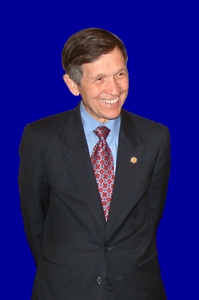


You're Kucinich!


As Dennis Kucinich, you are perceived as being just a bit outside. Despite not fitting in,
well, anywhere, you maintain a vocal presence and try not to let anyone get away with ignoring
you. This would make you the classically annoying kid on the fringe of a group if you weren't
proven right so darn often. Since you are, you end up being more like a really tactless prophet.


Take the 2008 Presidential Ticket Quiz
and the Book Quiz at the Blue Pyramid.


Thanks go to Knitting on the Left (Hand) for steering me to this quiz site!

Monday, September 24, 2007

Son's Self Portrait...

...with hot chocolate:

Sunday, September 23, 2007

Hanging Out with the Fish

Traditionally, Jews on Yom Kippur read the portion of the Bible about Jonah and the Whale, or rather (a better translation) Jonah and the Really Big Fish.

In this story, God commands Jonah to pass judgment against the people living in the capital of the Assyrian (ie, not Jewish) empire.

Jonah refuses, running off to sea to escape God.

The Bible that I picked up during services tells me that Jonah literally means dove, symbolizing his reluctance to put God's wrathful command to action.

When an enormous storm arises and will not abate, the crew throws Jonah overboard in an effort to appease God and make the winds die down. Once in the waters, a giant fish swallows Jonah whole. He stays in his belly for three days and three nights until Jonah repents to God.

* * *

Perhaps you guessed from my last post how frustrated I feel with Yom Kippur. So I did what Jonah did. I planned my escape.

So I packed my bag with my journal, an iPod with something specific in mind to listen to, a book, and other assorted entertainments.

After I left the synagogue, I walked to a local park to sit on a bench. But what I found there was not peace and quiet but a small peace rally. I held a banner which read "Peace is the way" and showed a dove with outstretched wings. I thought of Jonah, wondering if he could be here, too.

Then I sat on a bench, plugged in my earphone and turned on Julia Sweeney's Letting Go of God. She is terribly witty and amazingly wise--and, well, not exactly your standard Yom Kippur fare.

I've been an atheist all my life, but the role of organized religion has changed and re-changed over time. Right now I feel like I am hypocritical and lying, even making fun of true believers, if I engage in words and rituals that not only have no literal meaning to me but also challenge my metaphorical notions of how the world works.

Thinking about this rupture, I heard Sweeney say these words:

"If I look over my life, every single step of maturing for me, every single one, has had the exact same common denominator--and that was accepting what was true over what I wished were true."

When she has that long difficult conversation with God sitting on his suitcases, already thrown out of her house, she says:

"It's because I take you so seriously that I can't bring myself to believe in you. I mean, if it is any consolation, it's sort of a sign of respect."

I stayed on the park bench listening to Sweeney and realizing that not only did the lies keep me from being a good person but kept me from growing in other ways. I listened to her, words in my ears and yarn in my fingers to help me learn:


* * *
Eventually I come back in to services. We read Martin Buber: "We can be redeemed only to the extent we see ourselves." It is only by being totally honest with ourselves, only by acknowledging our individual truths, that we can truly move forward. Pretending something because it is comforting or pleasurable--or simply less dangerous--means muffling that small, still voice so intensely that we'll stop being able to hear it.

Perhaps the Very Big Fish will spit me out near Nineveh with increased purpose and renewed faith in faith. For right now, I'll light my candle in its belly and illuminate where I am.

Friday, September 21, 2007

Yom Kippur

This afternoon starting at 4:30, we begin a feast at a friend's house. We're bringing wine and homemade challah:


Why so early? Once the sun begins to go down, there is no eating--and no drinking water, no sex, no leather, and for many people no showering and no brushing teeth--until sundown has finished the next day. This twenty-five hour fast is accompanied by intense prayer while standing next to every Jew who can cram in next to you in the synagogue.

There is no knitting during services. Services last from 9:15am until nearly 8pm or later. That is an awfully long time to go without yarn in my hands. And will someone please tell me how I'm supposed to pay attention with neither stitches in front of me nor food in my belly?

Last year, CygKnit pointed out that 12 of the 39 forbidden acts chronicled in the Talmud are related to fiber.

I think the rabbis must have been talking directly to us....

"Have a happy Yom Kippur" is really not an appropriate greeting. It is relatively traditional to wish people an easy fast--but that does not seem entirely appropriate to me, either, given that this fast seems intended to be difficult. So I wish you a meaningful Holy Day full of reflection about both your own life and the life of your community.

Thursday, September 20, 2007

Praying with the Abundance


"You pray in your distress
and in your need;
would that you might also pray
in the fullness of your joy
and in your days of abundance."


--Kahlil Gibran


Wednesday, September 19, 2007

Triple Crisis

This past weekend I attended a teach-in on the "Triple Crisis" currently facing the world. "Triple Crisis" refers to the combination of climate change, peak oil (the end of cheap energy), and global resource depletion (including species extinction). In upcoming posts, I'll talk in more detail about all three--especially the last two, often not addressed in our popular press.

The line-up of speakers were unbelievable (at least for nerds like me): Bill McKibben, Frances Moore Lappe, Vandana Shiva, David Korten, Richard Heinberg, Wes Jackson, Carl Pope, Betsy Taylor, Megan Quinn, and many, many others.


This is the first time specialists in all three areas have come together for a major meeting like this. During the teach-in, all three crises were understood to be one large interconnected problem, deriving from the same causes (massive use of fossil fuels and the Earth's resources) and therefore able to be addressed in similar ways. One of the central approaches is the concept of "powering down"--or learning to live with far less energy, and far lower consumption of materials, than we currently use. One way of doing this is by moving to an increasingly local society. In the future I'll write more about this concept and how we and others are trying to address this answer.

I was especially pleased to see people address one of my pet concerns. So often, people who consider themselves environmentalists decide that the way to save the world is through purchasing more stuff. I'm very much part of this group myself, so please don't think I'm sitting on high judging everyone else. "Oh, let's go out and BuyBuyBuy all those hip new green products! Don't we need a Prius, and organic bamboo sheets, and new sustainably-forested-wood kitchen cabinets?" But overconsumption is what got us into this mess. We can't find our way out just by encouraging a new-and-improved kind of shopping. Check out this disturbingly hilarious video which makes this point with tongue firmly in cheek.

There were many academic disagreements at the conference, frustrations about the fact that no clear direction has emerged, and of course much rallying of the troops. We all left with a energy and enthusiasm for the fight--but also something I think too many of us have felt had abandoned us:

HOPE.

Tuesday, September 18, 2007

Approaching Reflection Collectively

I've been thinking a lot about how various cultures encourage and discourage both individual and collective reflection.

Within my own tradition of Judaism, the High Holy Days of Rosh Hashanah and Yom Kippur are a time set our for individuals to pore over the state of their souls--and to do it in the presence of many other individuals doing the same things. Some of the prayers we say aloud in unison ask us to take responsibility collectively for, and to unburden ourselves collectively from, "sins" or misdeeds we may have committed during the year. But the meditations of our individual hearts remain profoundly private.

Certainly the High Holy Days recognize the importance of the heart's direct prayer. The Torah portions (sections of the Jewish Bible) that we read on Rosh Hashanah focus explicitly on individual prayer or discussion--and even unabashedly direct bargaining--with God. The story of Hannah (the Biblical character who shares my name) is the tale of a woman who pleads for what she needs, using not the formal words of communal ritual practice but a song of her own, only partially articulated in any way those around her could understand. The story of Sarah likewise shows us the centrality of direct prayer rather than communal supplication--although perhaps in her case we learn a very different lesson as we watch her prayer that Hagar and her son be banished from the household of Abraham, a banishment the world is still dealing with.

As an atheist, prayer doesn't make much sense to me as anything but a way to talk to oneself. For those who hesitate to spend their lives in heavy reflection, prayer can be exactly the permission to spend a little while meditating about one's self. I am, as I'm sure you can tell, an avid navel-gazer already--and therefore find such constructed periods of prayer somewhat frustrating and contrived.

But I also find the space between private individual reflection and collective reflection to be cavernous.

There are ways that other cultures try to bridge this divide. The Clearness Committee, a concept drawn from Quaker thought, is designed to combine the meditations of an individual with the intellectual reflection of the community. Although the subject is the individual, those invited by the participant to join his or her clearness committee all think together to assist the individual in his or her process of reflection.

Traditionally, the focus person prepares a written statement outlining the issues he or she is facing. Like most bloggers, many participants find writing about their issues to be intensely fruitful to further thinking. The statement is circulated to those the focus person has asked to be on the committee.

When the group gathers, the focus person introduces the discussion. As one practitioner explains, "the committee members may speak--but everything they say is governed by one rule, a simple rule and yet one that most people find difficult and demanding: members are forbidden to speak to the focus person in any way except to ask honest, open questions. This means absolutely no advice and no amateur psychoanalysis. It means no 'Why don’t you...?' It means no 'That happened to me one time, and here’s what I did...' It means no 'There’s a book/therapist/exercise/diet that would help you a lot.' Nothing is allowed except real questions, honest and open questions, questions that will help the focus person remove the blocks to his or her inner truth without becoming burdened by the personal agendas of committee members. I may think I know the answer to your problem, and on rare occasions I may be right. But my answer is absolutely no value to you. The only answer that counts is one that arises from your own inner truth."

As the focus person answers the questions (as feels appropriate), deeper questions can arise. Through this dialectic, through its gentleness and silences as well as its depth, those on the clearness committee surround the focus person with space to allow a reflection far deeper than one mind working along might be able to approach. The Clearness process is not about determining the best way to fix a problem. It is about the community helping the individual's still, small voice to come forward. At the same time, as the above practitioner says, it is "a way to renew community in our individualist times, a way to free people from their isolation without threatening their integrity, a way to counteract the excesses of technique in caring, a way to create space for the spirit to move among us with healing and with power."

A blogger I admire very much wrote a post a couple of years ago which gives a very concise example of how a clearness committee can work. She then challenges us to think of who serves on our own clearness committees, who sits in the group that asks questions that cut to the core but always with love. "Find a unique way to thank them for serving," she writes,"--and start using them."

You, dear Reader, sit on my Clearness Committee. Thank you for the work you have already done, and the work that is to come. I am so honored by the comments yesterday's post received. So many of my favorite bloggers, folks whose blogs I've read and who've read this blog since I first started, seem to have stuck around for all those months when I was barely reading blogs and barely writing. How wonderful to see that you're still there for me.

Monday, September 17, 2007

Turning Points

This is the time of year when Jews reflect on the past year and consider what is ahead of us. We contemplate the actions we have taken and those we have not, all in an effort to help us see where we want to go and how to get there. I find myself at a crossroads this year.

I often see my life as a series of radically transformative moments. After one of these bolts of lightening flashes across my sky, growth follows in more-or-less predictable ways until the next storm arrives.

Some of these flashes of lightening have been completely out of my control: a violent rape when I was 17 that turned me into pacifist feminist introvert, the brain tumor and surgery, the birth of my child. Other turning points have been the result of relatively casual conversations (such as one that radically reorganized the way I approach religion), or books (such as Toni Weshler's book on fertility, which I found so empowering that I cannot imagine having had a homebirth or choosing to homeschool if I had not read it), or even festivals (like the Smithsonian Folklife Festival a few years ago with food as one of its themes).

Earlier this year, a documentary served as the first rumblings of a new storm. I've read a ton since then and done a lot of thinking. Usually, this blog is a place for me to work out some of my thoughts--but I've been nervous about talking about anything too disturbing on this blog--a blog which most people expect to be about fiber, food, and family.

Interestingly, I realized over Rosh Hashanah that the turning points in my life don't actually transform me but rather bring to the foreground some part of me that hasn't necessarily been as obvious. Certainly I was an introverted feminist pacifist before the rape, and I've always been a home-body hippie, too. But each of these moments changes the angle of my vision--and also the angle from which others see me.

I'm not a funny writer, nor am I one full of clever words*. Instead I am ridiculously earnest--yet I tend to be reluctant to write about extremely personal things, especially about fear. As you might have guessed from the appallingly low number of posts this summer, I have not been completely fulfilled by the blog recently. I've wanted to write about things I felt were taboo. I did not want to talk about difficult and painful things when you just came for pictures of a Swallowtail shawl or a photo of our little homegrown figs.

I am ready to climb back in the blog saddle--but be forewarned: I've brought more baggage for the journey this time.


*As Edgar Allan Poe says in the epigraph to the real "The Purloined Letter":
"Nothing is more hateful to wisdom than excessive cleverness."

Monday, September 03, 2007

Somewhere In Between

At the park, Son climbs on the crooked-hung swing and promptly slides out the back, landing hard and looking startled.

"Are you okay? Or rather, are you going to be okay?" asks Papa.

"Um...." says Son.

"What did your hurt: your bottom or your pride?" asks the father.

Son: "Somewhere in between!"

* * *

That is exactly where I am right now, too.

LinkWithin

Related Posts with Thumbnails