Thursday, September 14, 2006

"all about her..."

I am blown away by the prize gift amendment that just arrived in my mailbox. A few weeks ago, Stuntmother sent me a box of treasures. She included a note that there was another little item that would arrive later. Well--here it is:

Stitch markers from Zephyr that have little sayings such as "I knit, therefore I am," "To knit or not to knit, that is the question," "Oops, I knit it again!" (perfect for a pattern repeat marker), "If you knit it, they will come"...


...and THIS one...


It says: "Quoth the Maven, 'Knit some more!'"

* * *

On top of this amazing gift, the sock yarn Stuntmother sent me in the earlier box has totally become a new favorite. Here are the socks:


The yarn is dyed by Lisa Souza. I just ordered some more of her sock yarn to keep the family's hands busy and our luggage light during our fall and winter travels. Can't wait to try out some of the other gorgeous colorways!

* * *

Incidentally, Stuntmother just posted a list of deep answers the internet provided her when she spun the 8-ball and asked what she needed. As she did, I plugged "[my name] needs" into the search engine. The Google Gods don't seem to have that much to say to me, but they certainly were clever:

The Purloined Letter's author:

"needs a new name"

"needs adoptive parents who will support her mental therapy program"

"needs more than skills to escape the trap"

"needs a shave?"

"needs her vaccinations, worm tablets, and flea control"

"needs to write the word, then say the word, then say each letter as she writes it down again"

"needs to apply lots of make-up so she can perform in her latest dramatic role"

"needs a night of pure bliss that is all about her"

Tuesday, September 12, 2006

Mill Girls

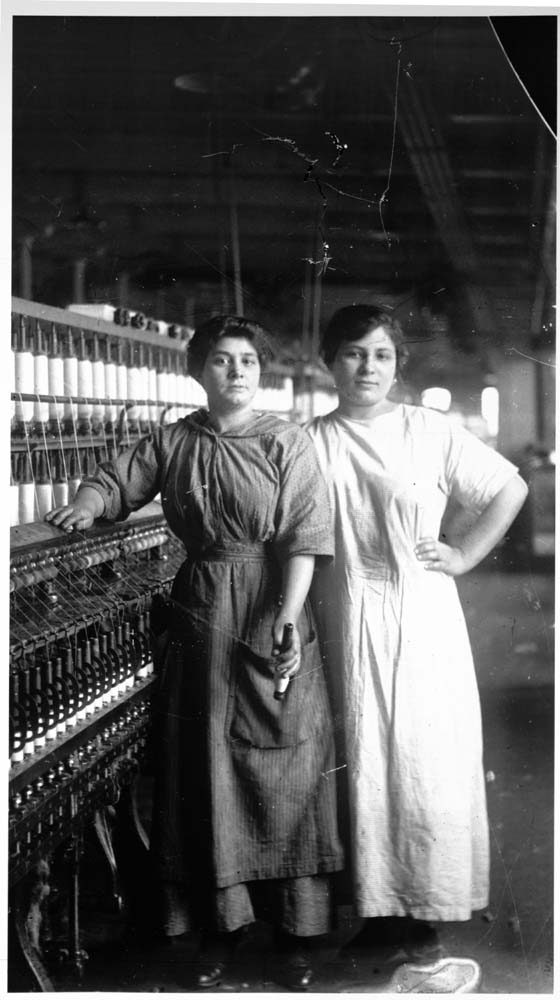
While we were touring the Green Mountain Spinnery during our trip to Vermont, I thought a great deal about the history of the textile industry in the United States.
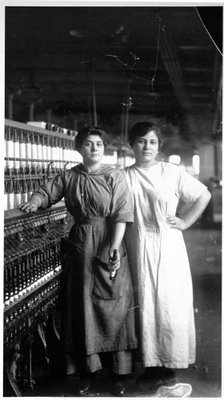


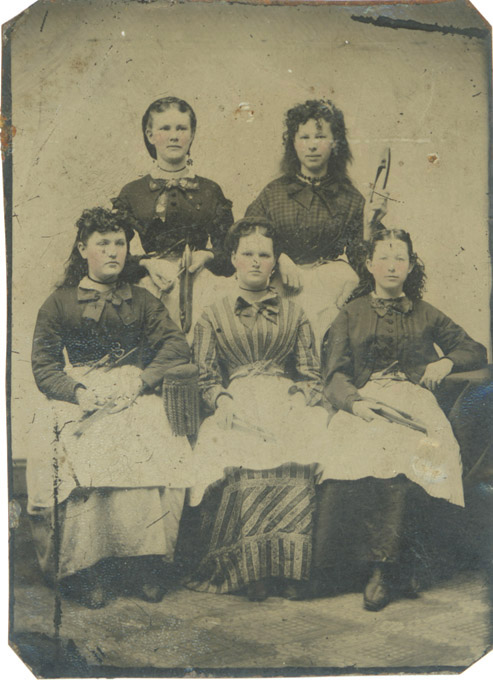
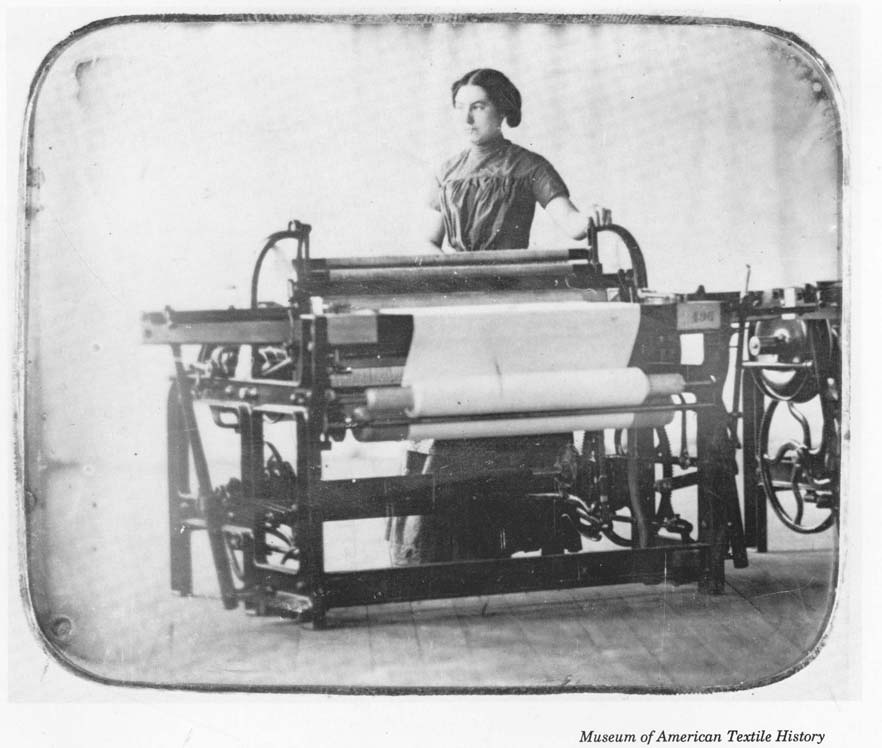
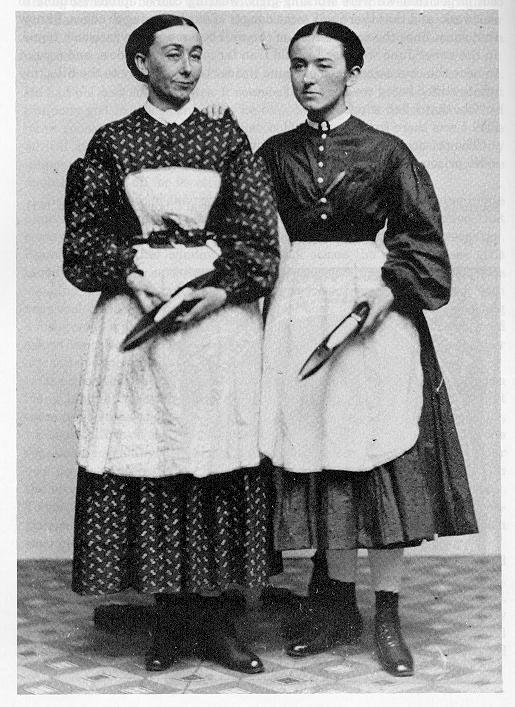
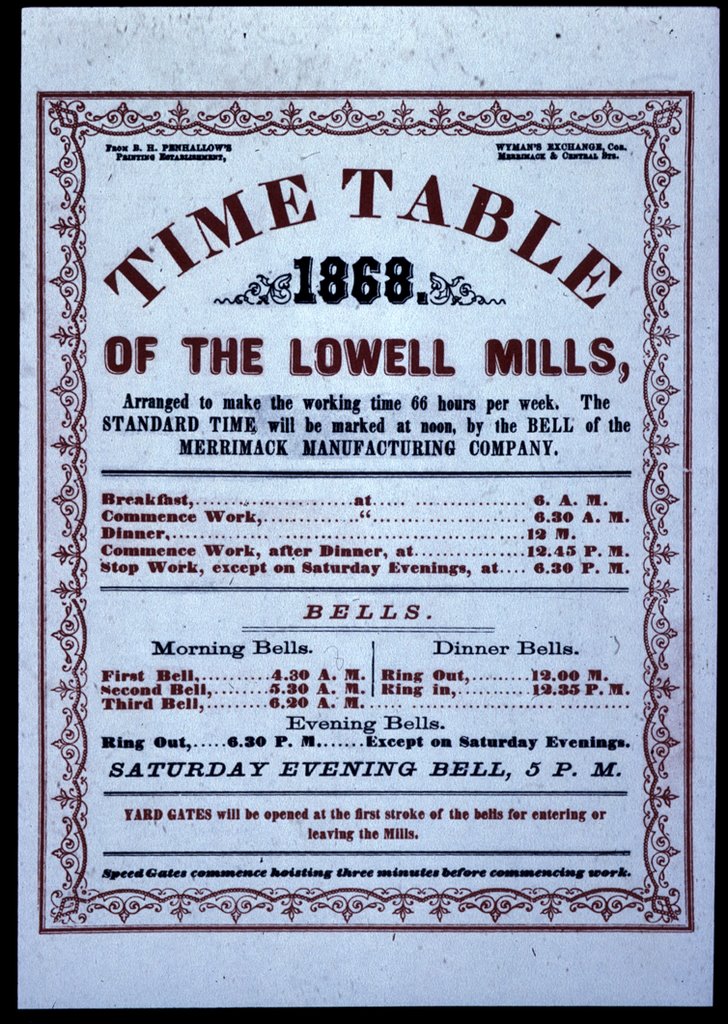
As America began to enter the period of the Industrial Revolution, many young woman between the ages of 15 and 25 moved from farms to work in the textile mill in Lowell, Massachusetts or in mills in other communities. Their families lived by the natural rhythms of the day--rising with the sun and preparing for evening as it set--and by the natural rhythms of the year--from planting to harvest. Now the young women employed by the mill would be subject to factory bells that determined when they awoke and when they worked in their seasonless jobs.


Expecting to work for a few years before marriage, the women who worked at Lowell lived not with families but in mill-owned boarding houses. In order to reassure parents concerned by having their daughters so far from home, the dormitories attempted to make a home away from home complete with cultural events, a newspaper, and strict rules. Most bedrooms held 8 women in a room with 4 double beds. 30 or 40 lived in each boardinghouse.


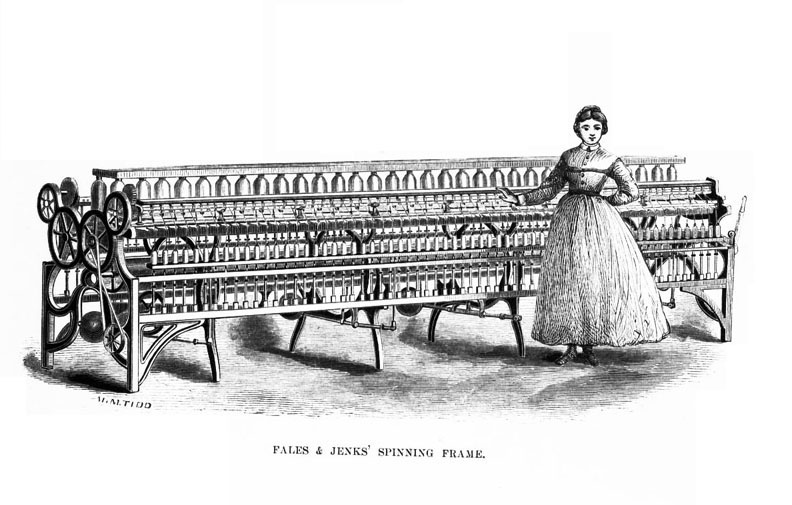
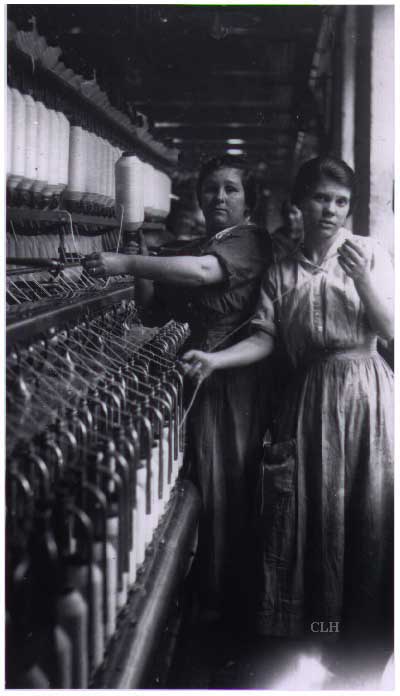
Lowell's main product was cotton cloth (from patterned weaves to printed patterns, from sheeting to shirting), but from the beginning it also produced woolen cloth, hosiery, and even rugs. From carding to spinning…

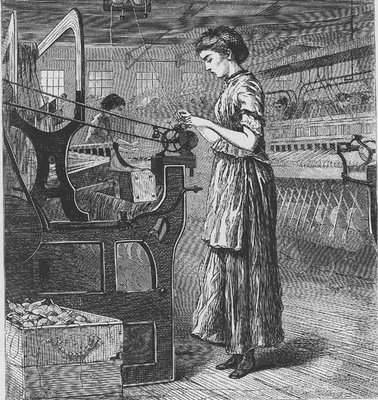


…from warping to weaving, young women transformed raw materials into cloth.


Work in the mill was hard. The hours were long (typically 73 hours per week), the chores repetitive, the expectations of bosses unrelenting, and the machinery often dangerous.
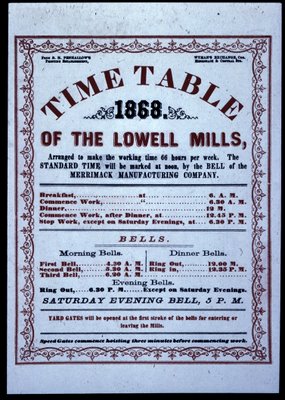
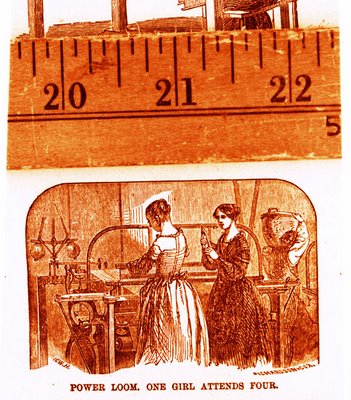


In 1844, some of the workers formed the Lowell Female Labor Reform Association to lobby for better pay and better treatment. The LFLRA was the first female union in the country. The organization eventually joined with the New England Workingmen's Association in order to negotiate more powerfully with management. Unfortunately, they were not very successful.

Before the Civil War, factory conditions worsened as the country entered an economic downturn. Hours were longer, pay was lower, and amenities decreased. Farm girls from Massachusetts found better opportunities. The new workers in the mill were Irish immigrant women and men (and later, Portuguese, Polish, and other immigrant workers) who found their efforts to negotiate even less successful. Other changes were also in store: a move from water power to steam--and the gradual removal of textile mills from the northern states to the South.


Although Lowell lost its prominence in the textile industry as the years went by, it continued to attract national attention. When in 1912 the state of Massachusetts passed a law requiring mills to limit working hours to 54 per week, mill administration slashed wages to compensate. Mill workers were united in their anger. A general strike erupted in Lawrence. Protests followed in many other mills including Lowell. This time, mill workers prevailed and they not only did not have their pay reduced but got a raise.

Monday, September 11, 2006

Fairy Bed

For the 5th birthday of one of our favorite young fairy-loving friends, David, Son, and I made a fairy bed!

Abe used his new tools to make a bed of his own design. (See his blog for more details.) After sawing the parts and nailing them together, he painted it a deep green. David sewed together a felt mattress. Abe made a pillow sham out of the same felt, outlined with mattress stitch. I made the coverlet.


Using incredibly tiny needles and miniscule and unforgiving crochet floss, I tried out a lace pattern from Barbara Walker's A Second Treasury of Knitting Patterns.


Today's ridiculous knitting was sponsored by a Pomegranate Cosmopolitan.


1 ounce Pomegranate juice
1 ounce Triple Sec
2 ounces Vodka
1/2 ounce lime juice

Shake with ice until very cold. This recipe makes a bit more than I can drink and still knit lace fairy bed coverlets....

Saturday, September 09, 2006

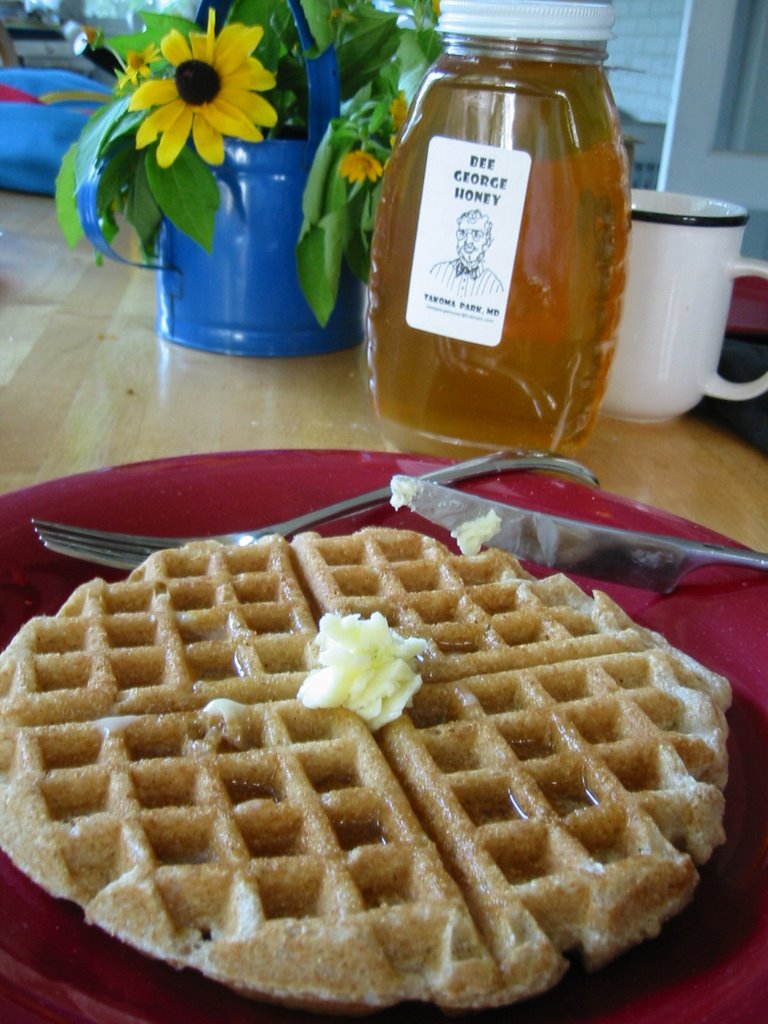
The Ravenous Raven: Local Breakfast


Whole Wheat Waffles
served with honey and butter

Recipe:

2 whole wheat pastry flour
2 tablespoons maple sugar
1 tablespoon baking powder
1/2 teaspoon salt
2 cups milk
6 tablespoons melted butter
2 eggs

Put all dry ingredients in a mixing bowl and stir well with a whisk to simulate sifting. Mix wet ingredients together then add them to the dry. Let sit for a few minutes. After you heat up your waffle maker, pour 1/2 cup of batter in and close until cooked. Enjoy with your favorite toppings. (If we are not using butter and honey, we love chunky homemade applesauce on top of our waffles.)

You can substitute other flours.

All the ingredients except the baking powder and the salt were grown and produced locally and bought at either the farmer's market or our food co-op.

Thursday, September 07, 2006

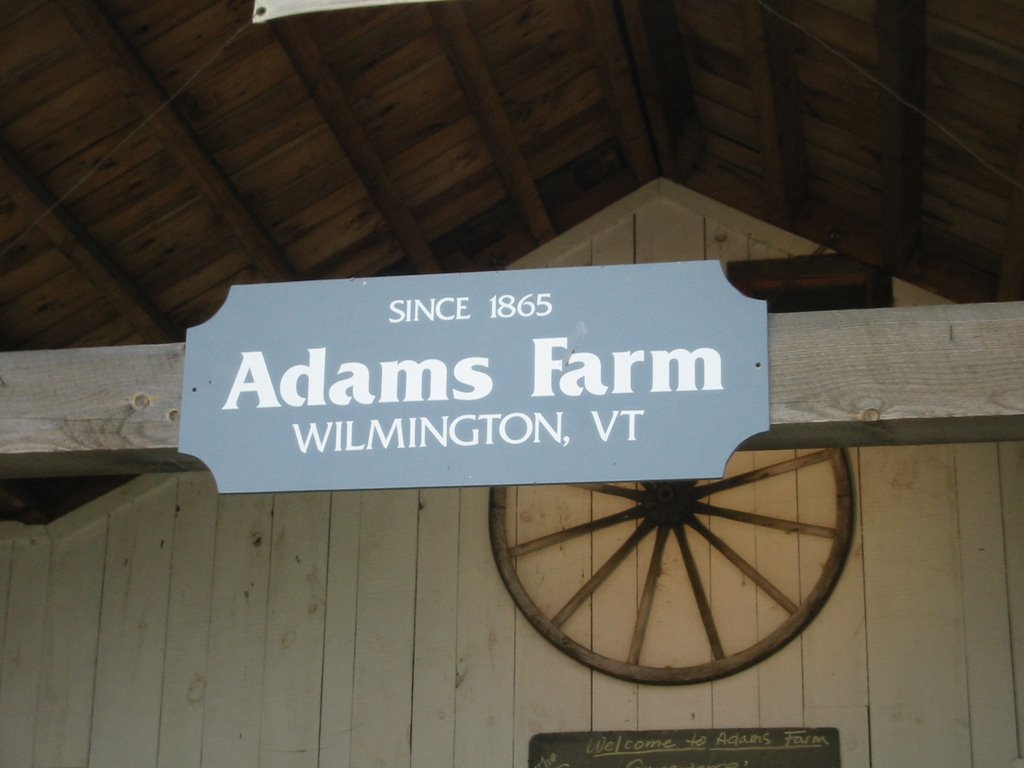
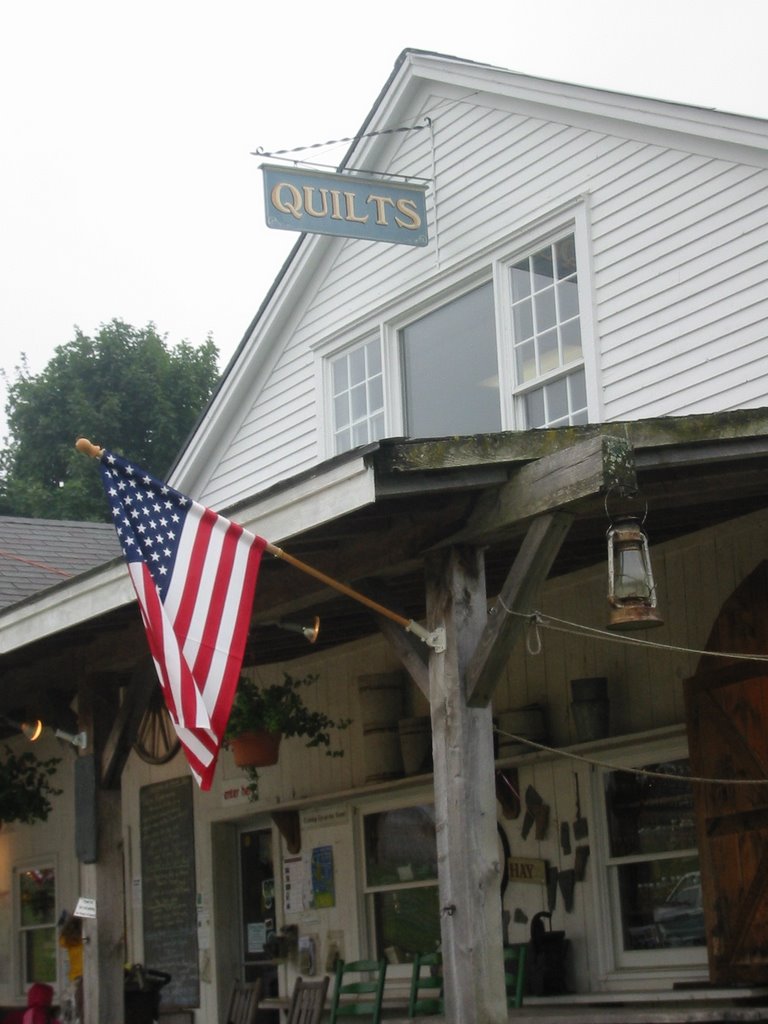
A Day at Adams Farm

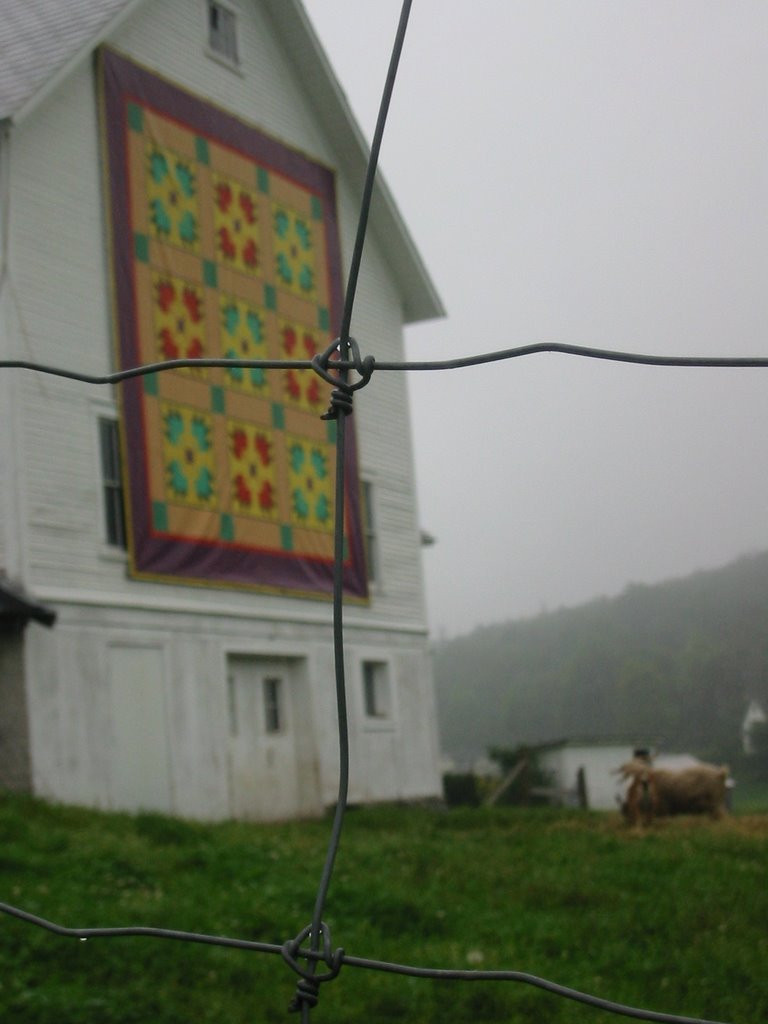
The day after we went to the Green Mountain Spinnery, we drove west about 20 miles to Adams Farm.


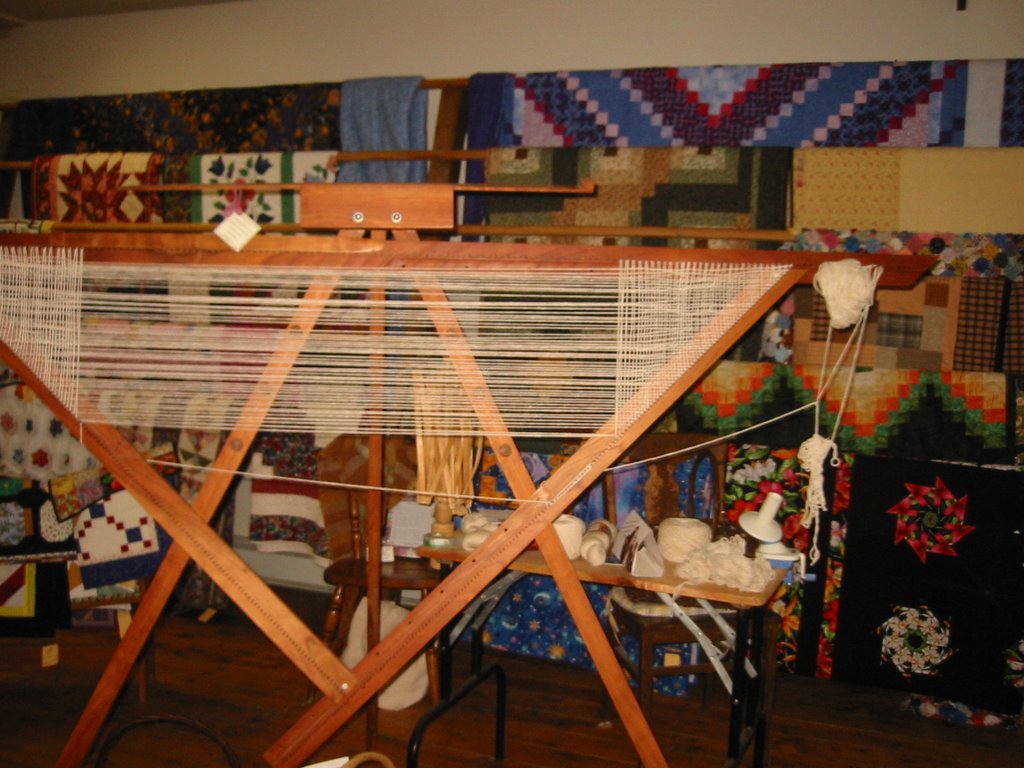
In addition to building a thriving tourist business around farm life, Adams Farm has constructed what is now my favorite fiber room of all time. There they sell yarn from their own sheep, quilts and quilting material, rug hooking materials, weaving equipment from Weavettes...


...to Tri-Looms,


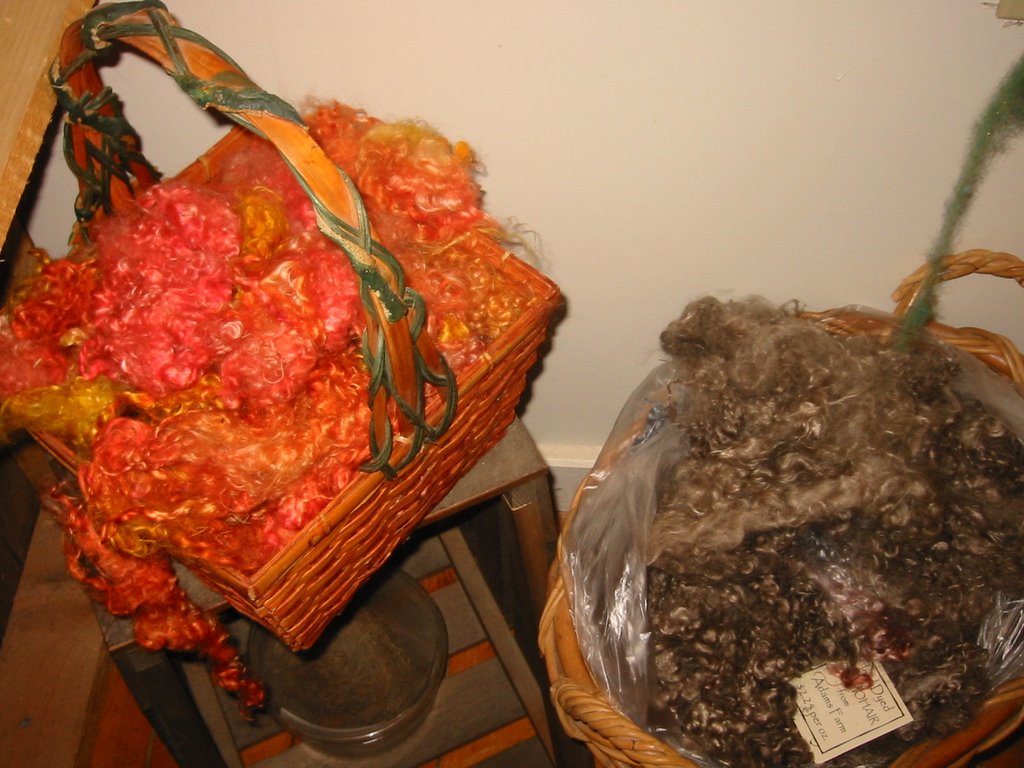
spinning equipment and an array of fibers,


and assorted dyestuffs.


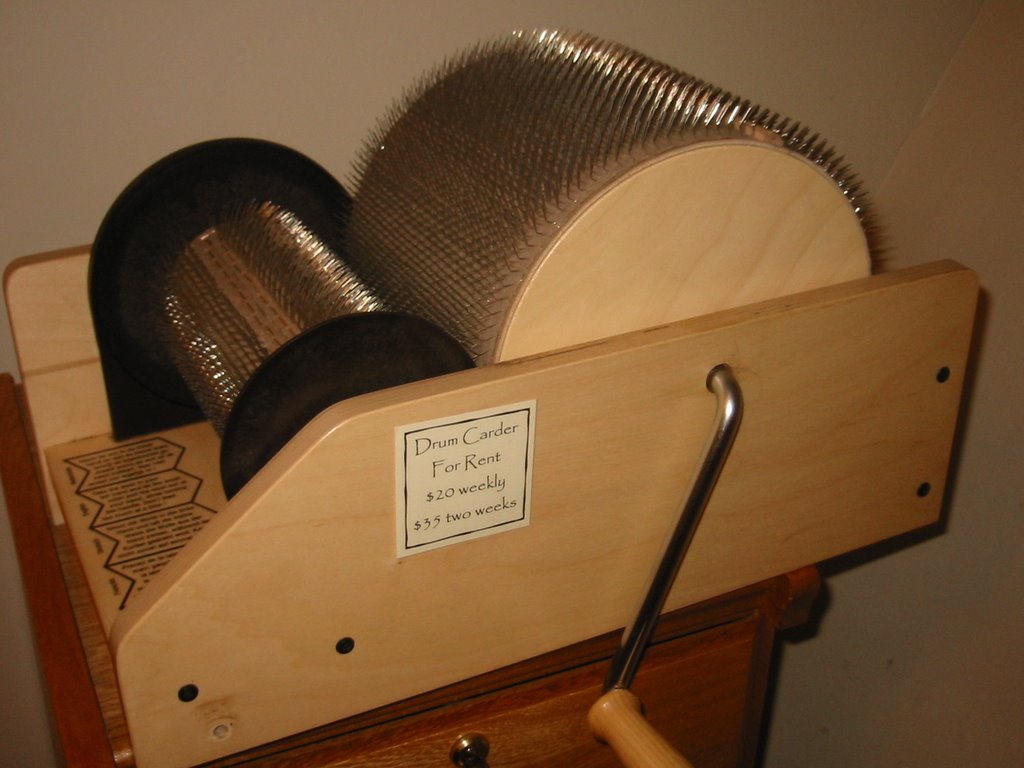
They even rent drum carders.


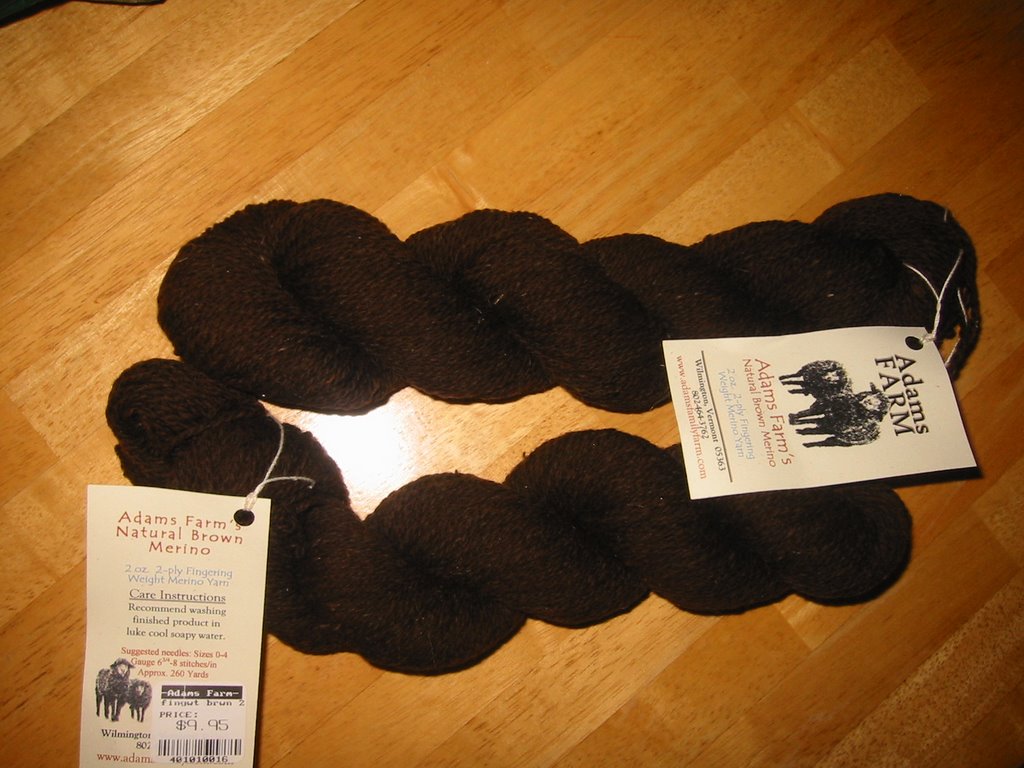
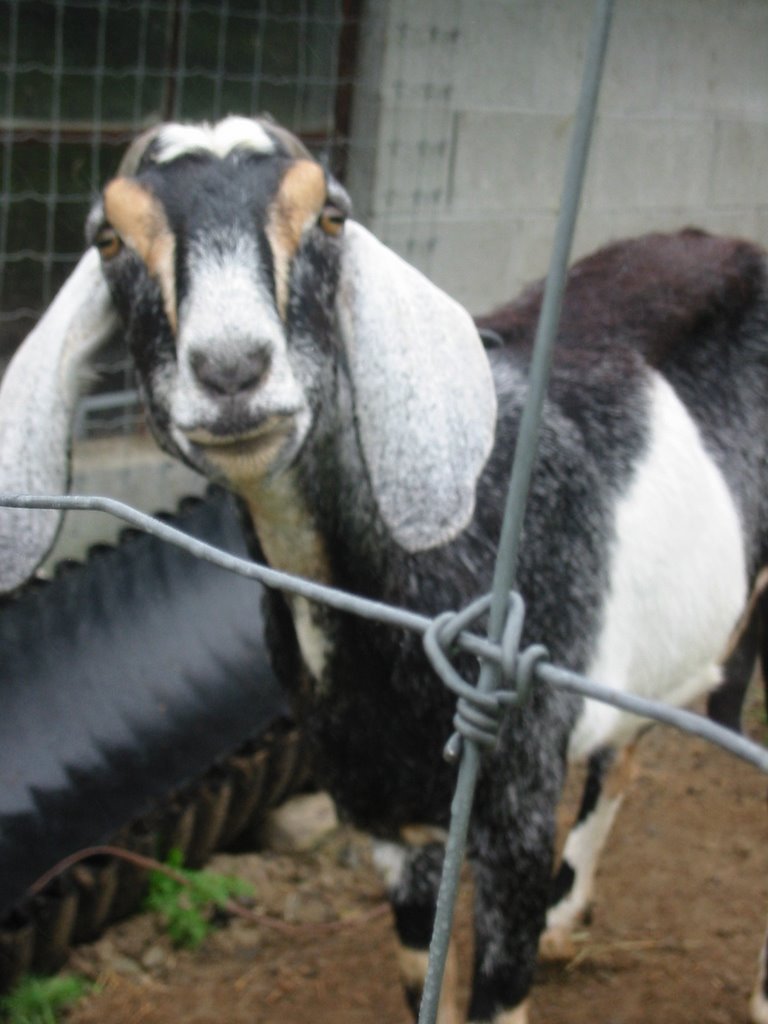
Adams Farm yarn is spun from the fleeces of the farm's own merinos. Although they do keep a bit of the fleece for hand carding and hand spinning, most of it is processed at the Green Mountain Spinnery and sent back to Adams Farm for sale on site.

I bought a couple of skeins of this rich chocolate undyed fingering:


I also could not resist these gorgeous colors made with natural dyes, some of which are made from plants grown on the property.


These skeins, from left to right, are dyed with:
1. Logwood, cochineal, and elderberry
2. Cochineal and logwood
3. Onion skns in an iron pot
4. Lac, Logwood, and Hibiscus
5. Rhubarb leaves

In addition to producing this yellowy-green color, rhubarb leaves can act as a mordant due to a particular acid found in them.

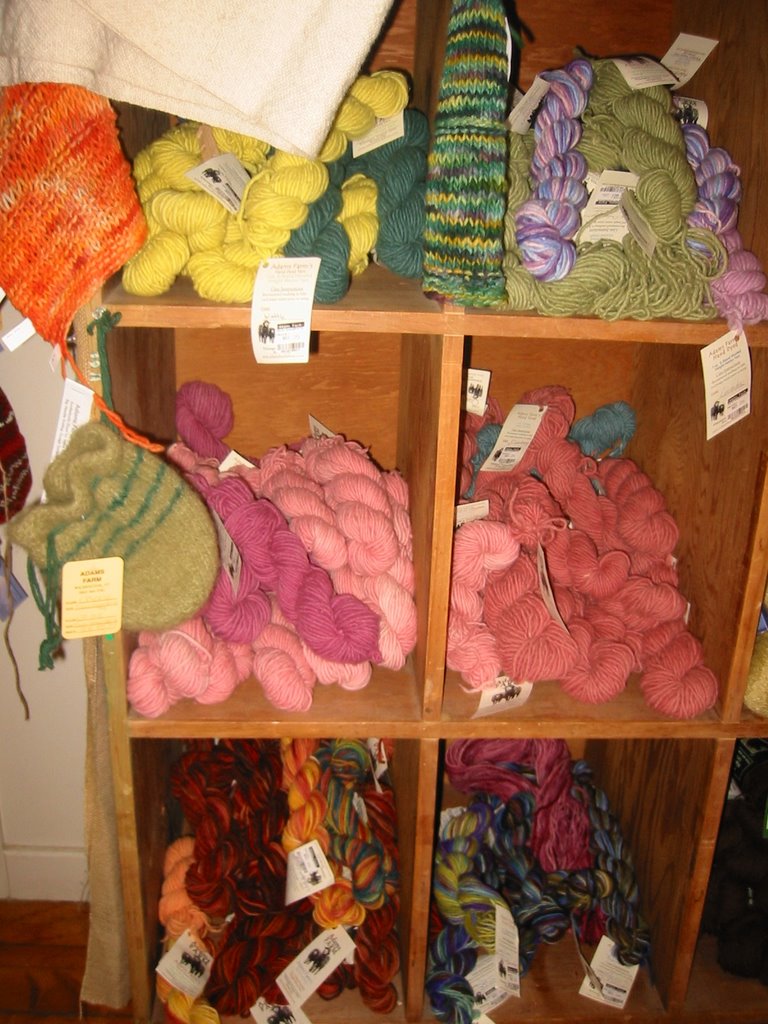
Seeing all the naturally-dyed yarn (which included many many more colors such as purples and pinks and even some handpainted, all of which I very sadly left on the shelf)...


...made me want to pull out the alum and madder root I bought earlier this year and try it on the fleece from MDSW. I added a jar of logwood pieces to my shopping bag. That should be an adventure!

I did not just buy yarn and dye. A sampler pack filled with fibers I have not tried yet called to me. In the bag are soy silk, bamboo, silk latte made from milk, viscose, tencil, ingeo, and also some extra-fine merino. I also bought samples of hemp top and flax.


Vermont was a fantastic state to explore and I hope we can go back very soon!

Wednesday, September 06, 2006

Green Mountain Spinnery, pt. 2

Our adventure continues...

After the Green Mountain Spinnery skeins their yarn, they ship much of it out but sell some in their small front store.

This little creature watched as I stacked my choices by the cash register.


Although the store sells many colorful yarns, it was the pure sheepy colors that called my name. Aren't these gorgeous? I wish I had purchased some of the same yarn in natural gray, too.

This yarn is made from the fleeces of sheep raised organically by Vermont farmers. Some of the shepherds sell their fleeces outright to the Spinnery while others request that Green Mountain process the fleeces and return them as yarn. They then can sell the yarn from their own sheep to visitors to their farms. (More on this tomorrow.)

After the fleeces are brought into the Spinnery, they are cleaned, carded, and spun through a process Green Mountain calls GREENSPUN. Unlike most of the yarn available to knitters, GMS yarns do not use petroleum in the scouring, carding, or spinning processes. Only gentle scouring soap and nonpetroleum carding oils are used. (For the upsetting facts about most commercial yarns, see the Worsted Witch's series of posts about textiles and sustainability.)

The Spinnery is deeply committed to production that is environmentally sound. To meet their commitments, they created a more efficient water-saving scouring system and a lanolin-extracting wastewater system.

Because of Green Mountain Spinnery's developments in sustainable production, the Northeast Organic Farming Association has established organic standards for yarn processing.

In addition to purchasing fleeces from local shepherds, Green Mountain does business in other ways that support the local economy. Yarns not sold in the store are mailed out in recycled boxes from a local mailing company. Waste wool is spun into interior windings for baseballs--by a Vermont company. Mill ends are donated to charitable organizations that teach knitting or donate knitted items. Occasionally, special mill runs are created for fundraising to support relief efforts for national and international crises.


You can learn more about the Green Mountain Spinnery in their stunning book of patterns and history: The Green Mountain Spinnery Knitting Book: Contemporary and Classic Patterns.

This is really my first purchase that answers the Village Knittiot's call to join her in the Summer of Knitting Naturally. Stay tuned to tomorrow's post for details of my second purchase and future plans!

Tuesday, September 05, 2006

Green Mountain Spinnery, pt, 1

While we were in Vermont, we were able to visit the Green Mountain Spinnery in Putney. (Good call in the comments, Lazuli and Jasmine!) What a treat it was!

As we planned our trip, I was disappointed to realize that we could not be at the Spinnery on the day of a factory tour. But, I thought, just being in their front store would be enough. Of course when we arrived and the woman in the shop talked with Son, she immediately whisked us to the back and showed off the machinery and the products. The workers there were so kind to Son. They talked to him at his level without ever being disrespectful or patronizing or overly simplifying the process.

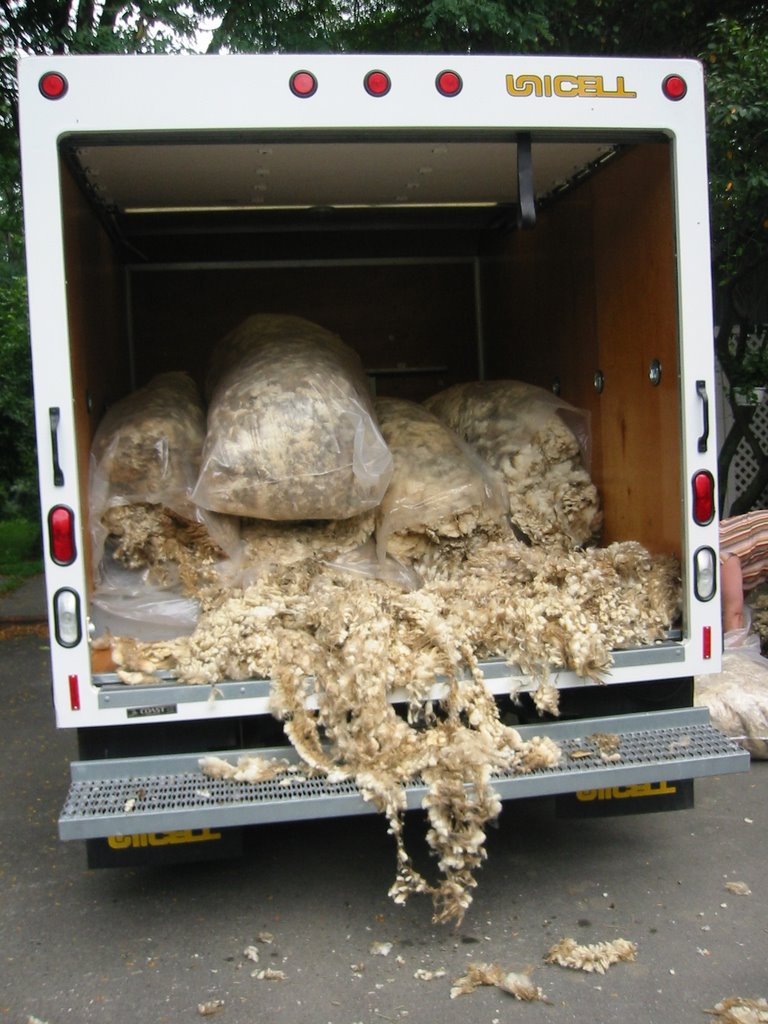
First, fleeces arrive.


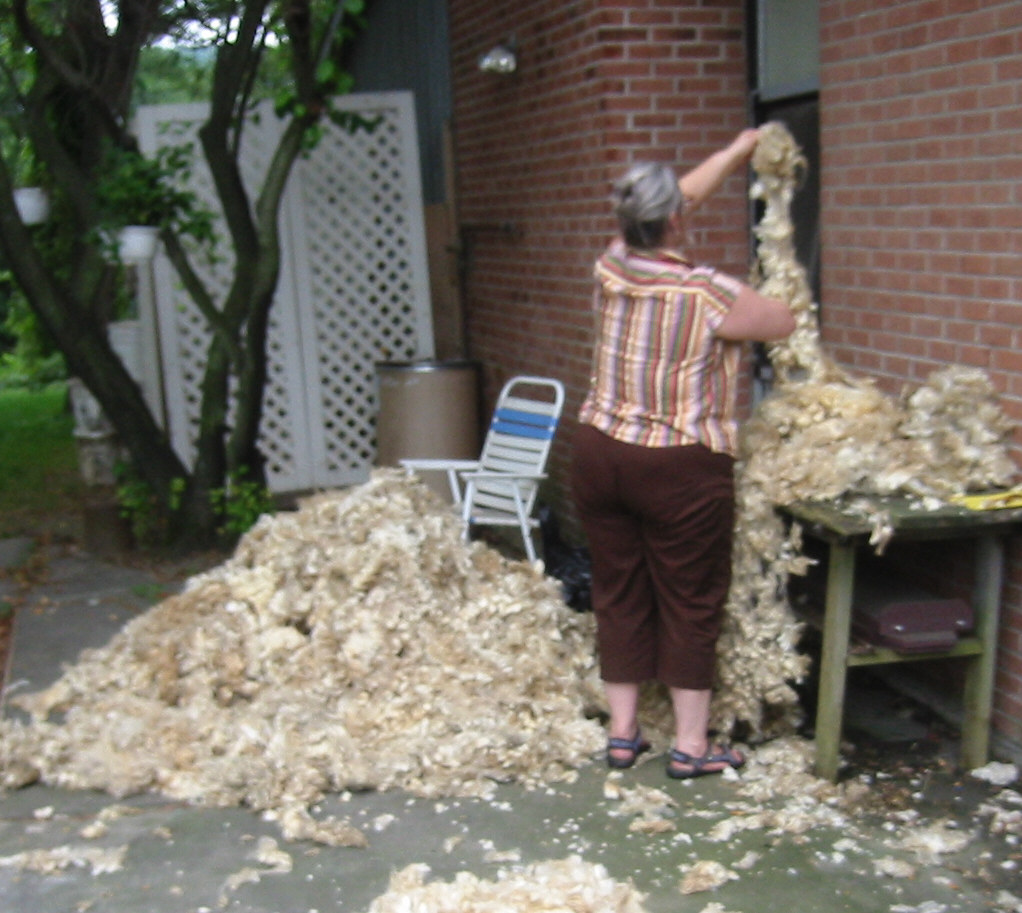
They are sorted...


...and taken to the wash room to be cleaned...


...then go through the water extractor.


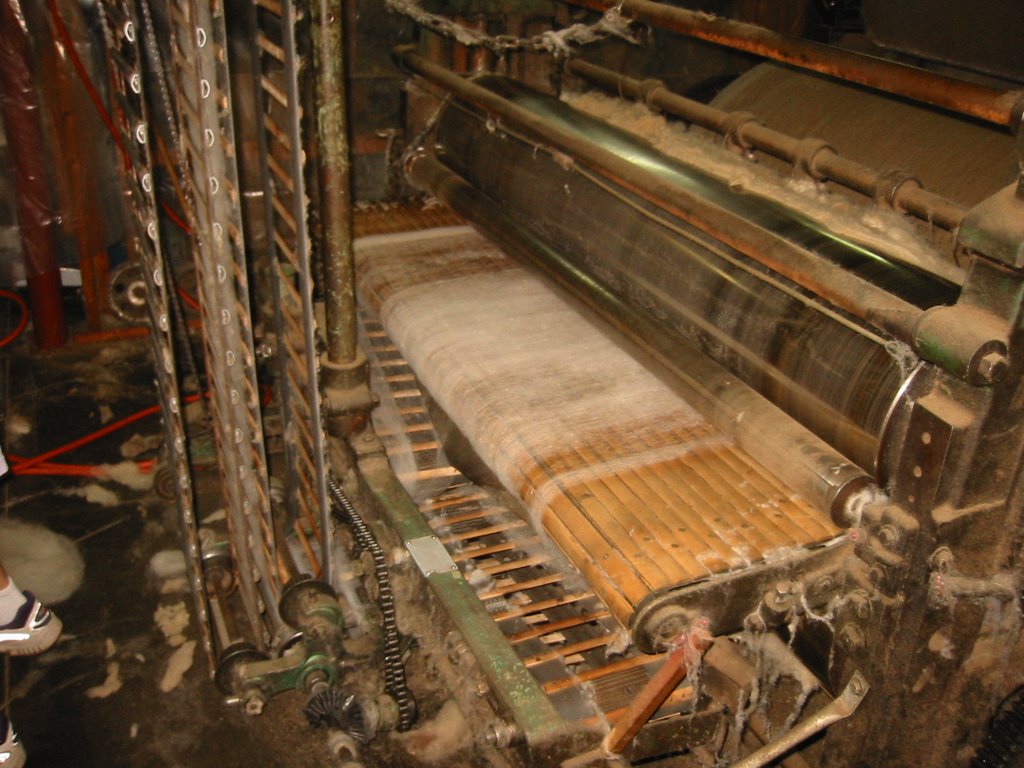
What an enormous drum carder! It was made in 1916.


The fleece is carded into batts...

...then go through this part of the machine...


...which turns the batts into pencil roving.


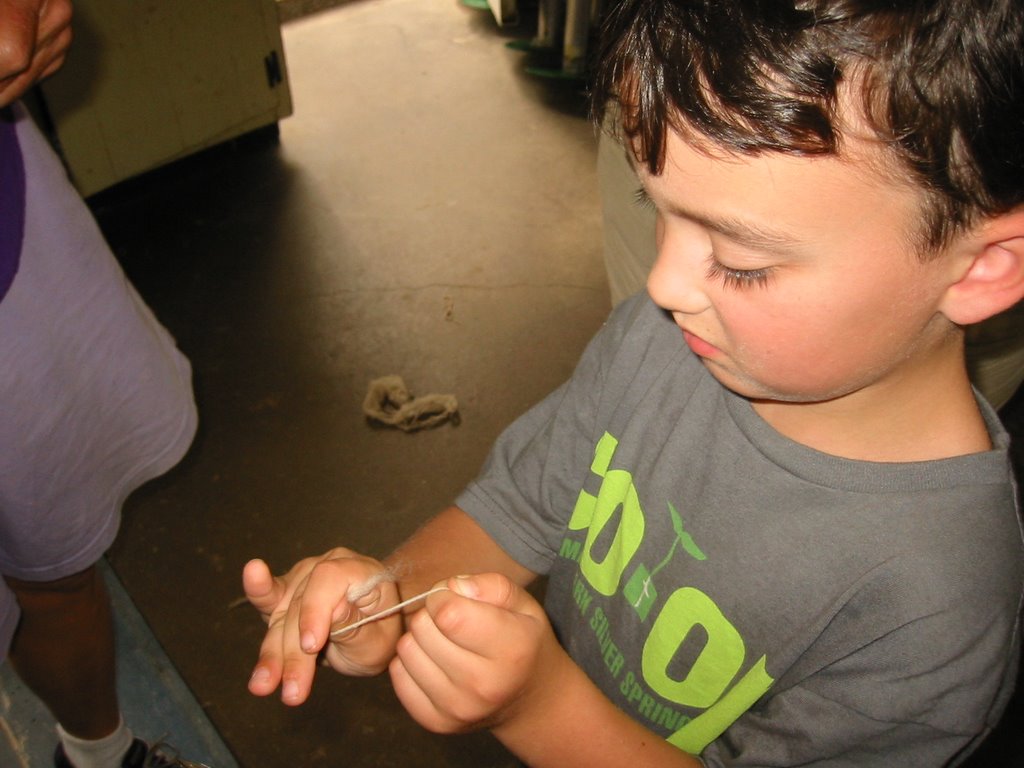
Son tests the strength of the pencil roving and sees how fragile it is compared to twisted yarn.


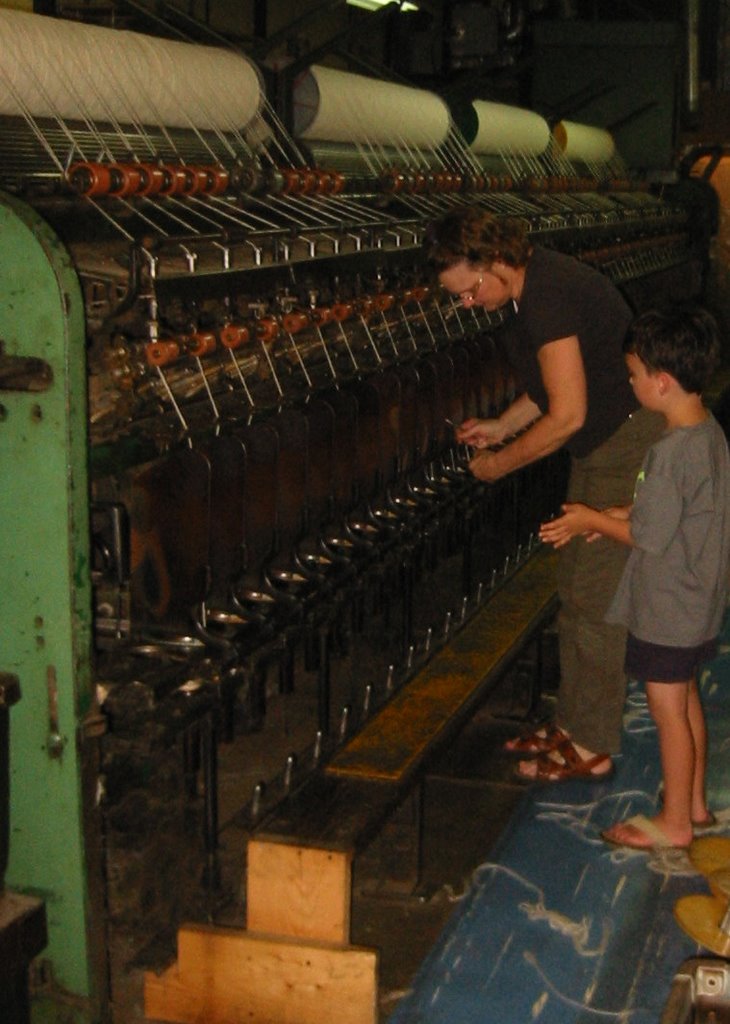
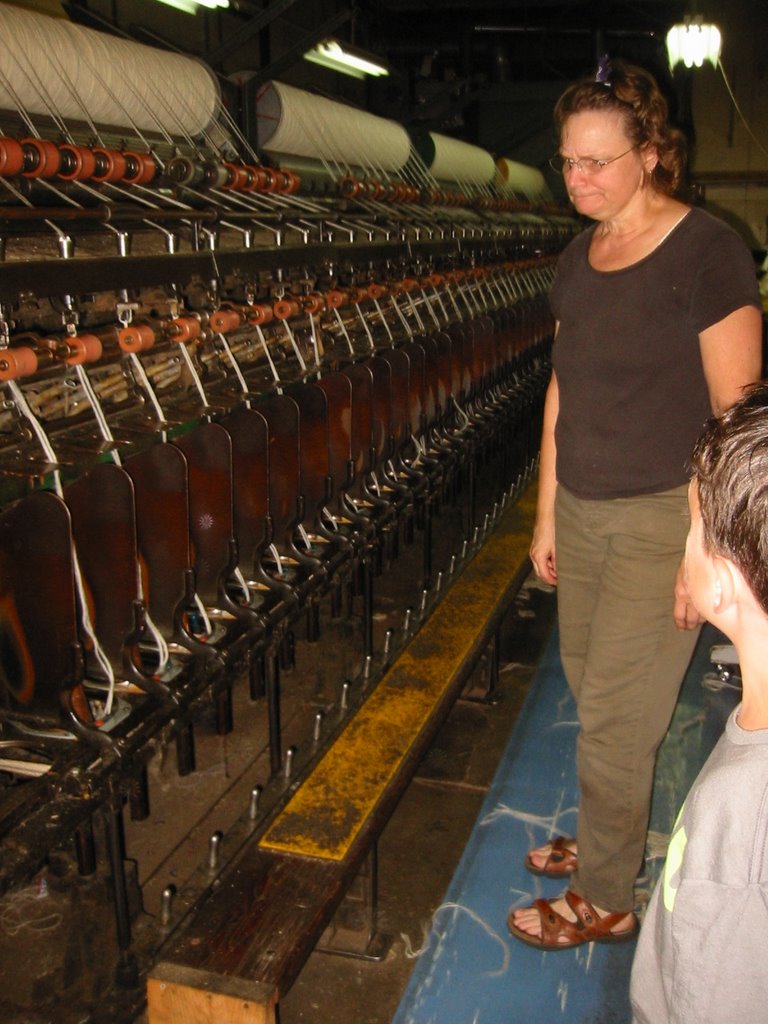
This machine, bought from one of the New England industrial textile mills, spins the roving into singles.


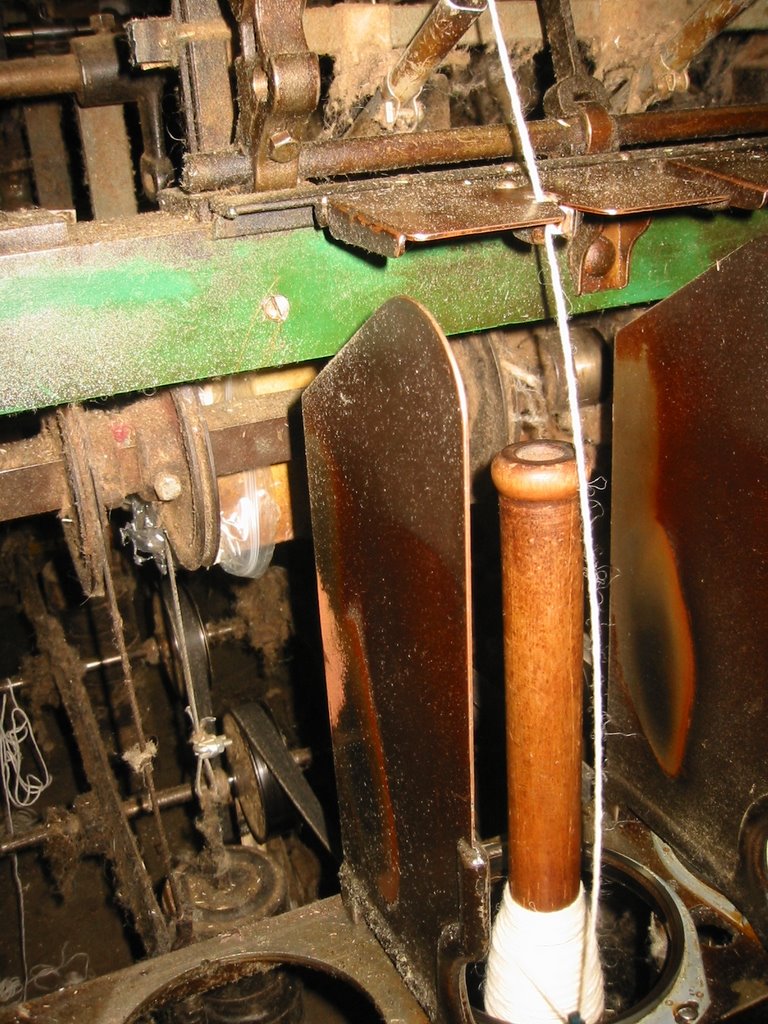
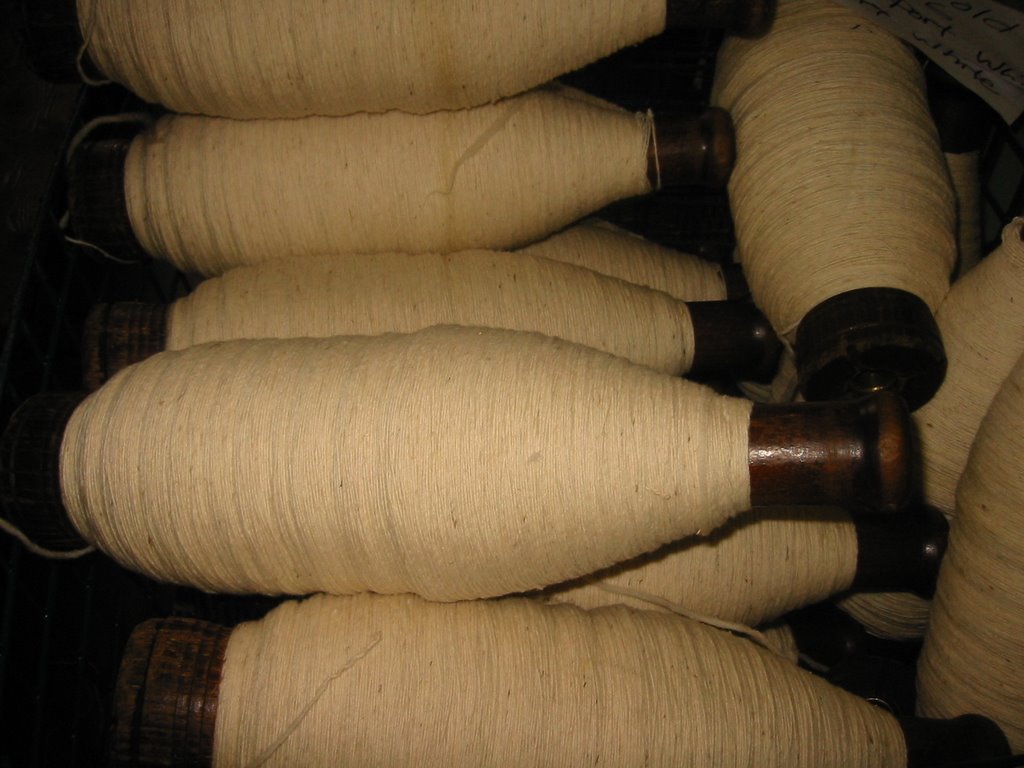
The yarn spins onto these beautiful old bobbins.


The woman running the spinning frame watches carefully to make sure everything is working properly. After a brief period, she skeins off several yards and weighs that skein to determine if the yarn is the right size. (She gave Son the test skein.)


The bobbins are collected...


...and the singles are taken to the plying machine.


Here the yarn is made into skeins on one whopper swift:


To be continued...

LinkWithin

Related Posts with Thumbnails