Showing posts with label Dark Days Challenge. Show all posts

Sunday, December 20, 2009

Eating in the Snow: Dark Days Update

Here at Chez Raven, located inside the beltway of Washington DC, we were blessed with almost twenty inches of snow this weekend!

My family spent much of the weekend sitting on the couch watching the snow, enjoying fires in the fireplace, listening to books on tape, knitting, and drinking warm beverages.

*  *  *

We started the morning with migas (made with local eggs, cheese, onions, and salsa as well as home-grown parsley picked just before the snow--but non-local beans) and mimosas (made fresh with non-local clementines and champagne):

migas and mimosas

mimosas during snow

* * *

I spent most of the day knitting holiday presents in the warmth of our house while David and our son shoveled the driveway, made snow forts, and went sledding.

*  *  *

Our brisket dinner cooked all day in the crockpot. I added to the pot a few onions, some turnips, mushrooms, carrots, shredded cabbage, and dehydrated greens. Before serving, I shredded the meat and added it back to the liquid. We served the stew next to mashed potatoes.  Everything was local except the tomato paste I added to the sauce.  We enjoyed some local red wine along with our meal.

local dinner--during snow

* * *

Dessert during the snow was homemade eggnog with local milk, egg yolks from local organically raised free-range chickens (important if you're consuming raw eggs), and maple syrup from the farmer's market. The adults spiked with non-local bourbon.

egg nog

* * *

This time, we decided not to have our meals at the bistro table on our deck.  The lump on the left lower than the table is my chair!

bistro table in snow

Sunday, November 29, 2009

Local Thanksgiving: Dark Days Challenge

We had a wonderfully quiet, almost 100% local Thanksgiving this year--following on the heels of a combination of travel to various conferences by both the adults in the family, work crises that took a lot of time and emotion, and lots of random busyness and its attending crankiness. It was lovely to take a day off just to cook, play games, and eat.

We have a tradition of splitting our Thanksgiving feast into two meals. This plan works well for both cooks and eaters.

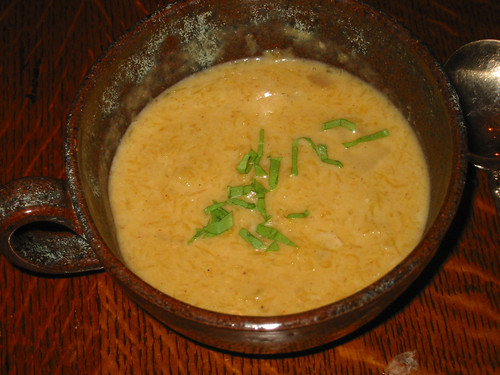
For lunch, we made a thick apple-butternut squash soup enriched with local onion, cream, and hot pepper as well as some non-local spices such as ginger and cumin.

soup

David fried up some fritters made with wild rice and frozen corn. The rice, while not local, is sold by the sustainable White Earth Land Recovery Project, an American Indian organization dedicated "to preserving and restoring traditional practices of sound land stewardship, language fluency, community development, and strengthening our spiritual and cultural heritage."

native fritters 2

It seemed especially fitting to recognize the importance on native harvests--like wild rice but also corn and winter squash--as well as American Indian cooking traditions. The recipe for the fritters can be found in the beautiful new book, Foods of the Americas: Native Recipes and Traditions.

* * *

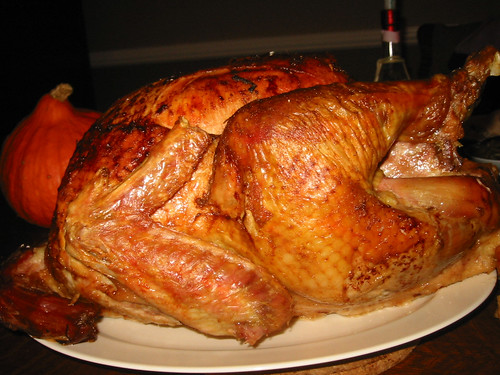
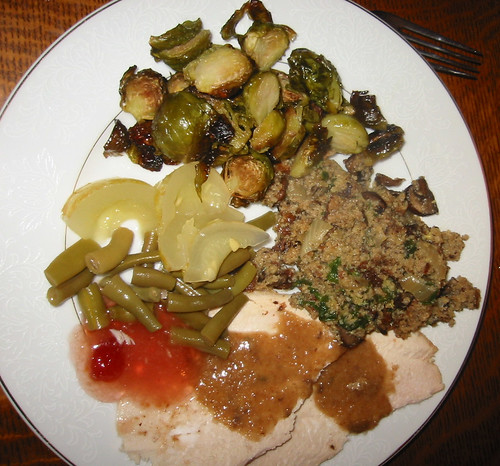
At suppertime, we had our main meal of local turkey, pickled lemon cukes, pickled garlicky green beans...

turkey with pickles in bowls

...roasted Brussels sprouts, mashed potatoes-and-turnips, and cherry jam (instead of cranberries--which we could not find locally).  The dressing was made from cornbread (the gorgeous Indian corn we grew in our backyard!), assorted winter greens from our backyard garden, CSA carrots, sage and rosemary from our herb plot, local eggs, lots of local mushrooms--plus local oysters!  We ran into them at the very last moment--and it was absolutely kismet.  Oyster stuffing may become a tradition in our family.

thanksgiving table

The meal was served with a local white wine. When David first handed it to me, I misread the variety and honestly thought it said it was Vinegar. Luckily, it was a delicious, perfect-with-turkey Viognier.

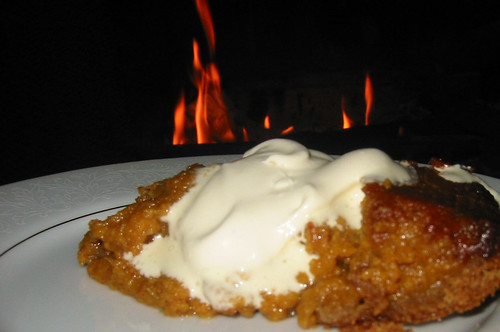
To end the feast, David made a not-pumpkin pie using the recipe on the back of canned pumpkin. He made a few exceptions: first, he used pureed butternut squash and carnival squash which he baked himself. Second, he replaced the canned evaporated milk with a mix of milk and cream from our Amish dairy supplier.

pie

The pie was fabulous--a little yellower than pumpkin pie but sweet, light, and delicate. We served it warm with whipped cream.

We enjoyed the rest of the evening in front of a fire in the fireplace, sipping our wine and reconnecting.

Sunday, November 22, 2009

Eating Local during the Dark Days of Winter


This year's celebration of the eating local during the Dark Days begins this week. While finding local produce seems easy during the abundant harvests of late summer and early fall, the pickings start getting slim once the temperatures drop and the amount of light lessons. The annual challenge put forth by the (not so) Urban Hennery helps motivate eaters to keep up the work and realize that what sometimes seems hidden is in fact its own kind of abundance.

Eighteen months ago, we started a tradition of Eco-Shabbat, or Sabbath for the Earth--a continuation of Earth Hour. We were originally inspired by Melinda at One Green Generation to have an evening off the grid. We've enjoyed the candlelight dinners every fall, winter, and spring--but during the summer, we usually loose our way when the sun provides the light to allow us to continue full speed ahead. Darkness doesn't point toward a slowing down until it is almost time for bed.

But now that the "Dark Days" are back, we've started again. Our No Impact Project helped us adopt the practice again more regularly this season. The official project guide gives a variety of helpful suggestions for ways to mark one day a week as an eco-sabbath.

For our recent Eco-Shabbat, we pulled the only successful spaghetti squash out of our garden and baked it up.  We served it with a sauce made of red peppers (from our amazing CSA), which we dehydrated last summer.  Dried peppers simmered in water--just as simple and plain as that, and yet it was astoundingly delicious.

For a side, we cooked up some mixed greens with an onion and some garlic from our CSA and from the farmer's market in town.

We also served a home-canned jar of "Not-So-Sweet Bread and Butter Pickles." The recipe can be found in the excellent canning guide The Joy of Pickling: 250 Flavor-Packed Flavor-Packed Recipes for Vegetables and More from Garden or Market.

For our dessert beverage, the adults at the table sipped our sickeningly sweet but oddly charming homemade Rhubarb Liqueur.  This little taste of preserved summer was a lovely ending to the evening.

dark days 1

Friday, January 02, 2009

Eating Local on the Road


I've not been posting much recently about our efforts to eat locally, but that does not mean we haven't been doing it! At home, much of our diet is sourced locally--so much that we sometimes take it for granted. Quite often, we realize half way through a meal that all ingredients other than salt and pepper are local.

On the road, however, it is a little more difficult. Our two week vacation to visit our families has had a few local moments--including one of my favorite annual traditions: roasted oysters, gathered and prepared in coastal South Carolina where my parents are from. Delicious!

Saturday, November 29, 2008

Local Thanksgiving


Although on Thursday we attended a friend's Thanksgiving, on Friday we cooked our own meal--all local and some of it from our own backyard garden.

* * *

For several years, we've split our celebratory meal into two. This allows us to have a full menu, not starve in the early part of the day, and not get too extraordinarily stuffed at the end.

For lunch, we served a salad of our backyard-grown arugula, local feta seasoned with Herbes de Provence (found at the farmers market), and a homemade maple-mustard vinaigrette.


We completed our midday section with a thick and spicy pumpkin soup. After roasting the tan pumpkin for about 45 minutes, I scooped out the flesh and added it to some sauteed onions and apples that I had going in the soup pot. Then I threw in some some vegetable-peeling stock, a bit of cream, pureed hot peppers, and a pinch of non-local curry powder. A warming preparation for an afternoon of cooking.


* * *

Dinner was more elaborate.

We acquired the local turkey from our Amish dairy supplier and served it with all our favorite sides.


Using corn we grew and ground ourselves, I made a skillet of all-corn cornbread, then crumbled it up and added mushrooms, onions, and some of our own backyard mustard greens. Throw in a couple of eggs, a bit of turkey broth seasoned with sage and rosemary, and then bake in a casserole for about half and hour. Surprisingly delicious. I felt quite proud eating what we had nurtured from seed.

Our main vegetable was roasted Brussels sprouts--an all-time favorite around here. There is very little that is easier to make. Cut the orbs in half length-wise, toss them on a baking sheet with oil, salt, and pepper, then roast until brown and slightly crispy. I throw them in with whatever else I am cooking, so the temperature varies--but ideally, try something around 400 degrees.

Because we could not find local cranberries, we substituted a thrown-together relish: cherry preserves I canned over the summer with some farmers-market horseradish. It was the same combination of sweet and tart--but it reminded me more of Passover than it did of Thanksgiving...

We also served two of our pickles, both canned with produce we grew ourselves. The green beans were spicy and garlicy, while the lemon cukes were sweet and mild. Great combo.


We drank a bottle of white made by our county's own vineyard. A bit sweet, which went well with the turkey.

* * *

To end our local feast, we made a sweet potato pie with a whole-wheat crust, served it with maple whipped cream, and ate it in front of a lovely fire.


We all were satiated and slept very, very well.

Sunday, November 23, 2008

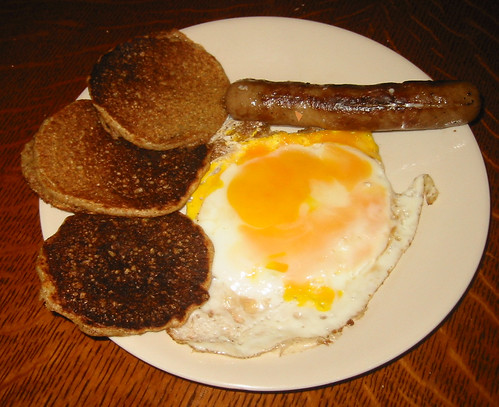
Our family has decided to kick off the Dark Days Challenge by making a local breakfast of pancakes, eggs, and sausage.


The eggs and sausage came from our Amish dairy source. Delicious, easy, and filling.

The pancakes were more complicated. Although the wheat was not grown locally, we bought it in bulk and ground it ourselves with a little human-powered grinder. (You can see which human we're talking about in that link.)


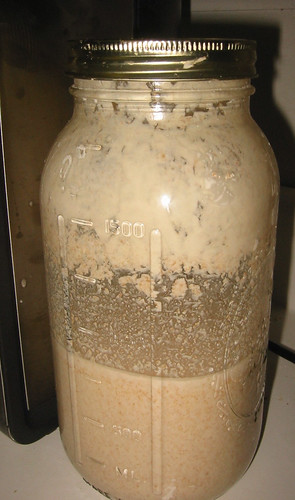
We then made a sourdough starter with that flour. The jar of starter lives on the counter of our very cold kitchen. We feed it regularly and when the half-gallon jar gets too full...


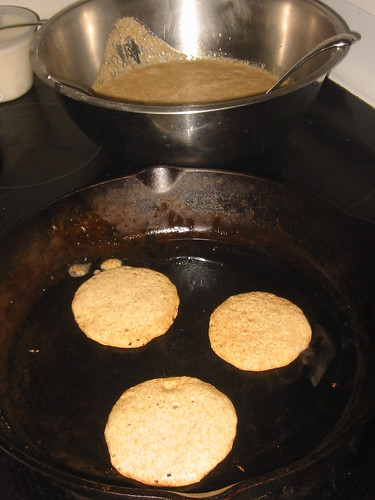
...we pull out a two cups of the starter, add sugar to taste (a tablespoon or two is our usual, depending on the cook) as well as three or four tablespoons of melted butter or oil. Throw in a pinch of salt. If the mixture seems too loose for pancakes, add enough flour to thicken it up a bit. If you like, stir in an egg, or some grated apple, or blueberries, or whatever. Then add a teaspoon of baking soda to the batter. You can dilute it in a tiny amount of water first or you can just pour it in. Stir it and let the batter foam for a moment as you heat up a skillet.

Remember those volcanoes we made in elementary school with baking soda and vinegar? These pancakes work on the same principle. The sourdough starter mixed with soda causes the release of gas which allows the pancakes to rise without baking powder.

The flavor is a bit different from "sweet" pancakes, but we think they are absolutely delicious with farmer's market maple syrup!

LinkWithin

Related Posts with Thumbnails